Bicycle Diaries

Recent Posts

4.9.09

Why be conservative?

why
not?


I don’t have much faith in my fellow man. In fact, my own conservatism has much to do with the fact that I reject the entire notion of human improvement altogether. Grandiose liberal efforts do not work, not because they are simply led by the wrong kind of men, but because they are led by men, period. “Progressivism” is a great idea. But most progressives can’t balance their checkbooks much less create nirvana. “Feminism” sounds swell. Too bad females are most cruel to other women. “Multiculturalism” is well intentioned. Yet it seems every time different cultures cohabitate it creates more friction than friendship.

I’m a mess too ... I’m awful with money, eat poorly, drink too much and don’t spend enough time with friends and family. But then again, most of those same friends and family are guilty of the same flaws and faults.

Jack Hunter
August 09, 2009

Labels: , ,

20.8.09

Rolling along

our hobo legacy

One thing you'll notice about the bike community in the City of Big Shoulders is diversity. There are hipster beaterbikes, yuppie spandex-wrapped weekend warriors, Latino ice cream vendors, WASPy commuters, freakbikers, teenage BMXers, and more. Although I haven't seen many South Asians, the streets are a celebration of multi-cultural Chicago.

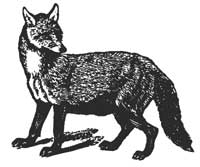
One group I've begun to notice is what I call The Rollers. They rock! They bike for the sheer joy of the ride, everyday in every kind of weather. Rollers are consummate foxes; or even cats, since they know and do a lot of little things about bikes. You might first think their shared passion for bikes qualifies them as hedgehogs. But the diversity of the bikes themselves as well as values and ideologies is so vast that a hedgehog could never accommodate it all with one big idea.

So rollers aren't necessarily anarchists, unless they want to be. If that label is incorrectly applied by motorists and government authorities, it's because rollers flourish on the edges of American society. Their very existence poses a threat to middle class conformity and this seems to really irritate some motorists.

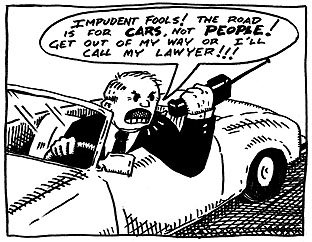
I've had a number of run-ins with motorists who have shouted insults at me as I rolled along ... LEGALLY. Each time I got the distinct impression that I had gravely wounded their sense of middle class propriety. That I might have rolling rights as a legally recognized slow-moving vehicle didn't seem to enter their minds. They either saw me as a big kid on a toy endangering the streets or selfish hobbiest with more time for leisure pursuits than the harried motorists going to work or shuttling the kids to their doctor appointments.

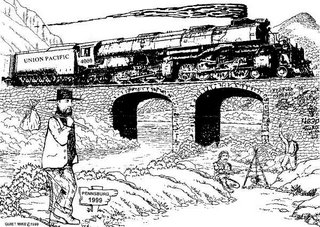
Such thinking isn't all that surprising. In many ways, rolling against middle class conventions is an old, if odd, American tradition. Rollers are the grandsons and granddaughters of the tramps, loafers, and what the French called flaneurs. They're the sons and daughters of hobos, travellers, vagabonds, and backpackers. They're essentially slackers on two wheels. As such they draw the unwelcome attention of police and politicians as much as did their peculiar ancestors.

When the Depression of 1893 threw millions of men and women out of work they hit the roads. State legislatures, as well as business leaders, around the US reacted with horror and enacted highly stringent laws against these tramps. In a surprising response, Governor L. D. Lewelling defended their rights against arbitrary arrest by local police. His Tramp Circular is not only a astonishing reminder of a time when Kansas was progressive but a wonderful statement of why today we have the right to roll along.
The right to go freely from place to place ... in obedience of a mere whim, is part of that personal liberty guaranteed by the Constitution of the United States to every human being on American soil. If voluntary idleness is not forbidden; if a Diogenes prefer poverty; if a Columbus choose hunger and the discovery of a new race, rather than seek personal comfort by engaging in “some legitimate business,” I am aware of no power in the legislature or in city councils to deny; him the right to seek happiness in his own way, so long as he harms no other, rich or poor; but let simple poverty cease to be a crime.
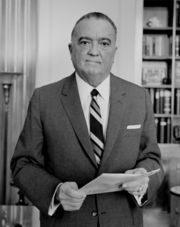
Not that I'm all that comfortable with labeling rollers, Slackers on Two Wheels. In the wrong mouths, labels can be dangerous. If you think that mere words can't harm, remember that J. Edgar Hoover threw stick and stones at the bones of the rollers' ancestors. During WWI, he was a special agent for the newly formed FBI in charge of Slacker Raids. Agents and civilian vigilantes rounded up foreigners, conscientious objectors, left-leaning idealists, and other outsiders for indefinite detention. Although some were certainly spies and draft-dodgers, most were simply expressing their rights to roll against war hysteria.

Today, rollers, whatever their particular values or ideologies, continue to ride for the right to seek happiness in their own way.

Labels: , ,

17.6.09

Isaiah Berlin...

and the lost cosmonaut

The 65th Anniversary of the D-Day Landings in Normandy on 6 June greatly overshadowed the 100th birthday of Isaiah Berlin that same day. And I realize there haven't been any posts on Isaiah Berlin lately. It's not that I've stopped reading this spring. Much to the contrary: I'm a dipper who usually reads 3 or 4 books at a time. I try to balance the serious, long reads on philosophy or politics with the lighter stuff: historical novels or short story collections.

In the last few months I've stacked up my current reads in the living room and bedroom. Both stacks, typical of a fox, include historical espionage by Eric Ambler and Alan Furst, a series of fictional biographies on Winston Churchill, the Soviet experience of WWII, obscure historical figures, and bizarre travel adventures.

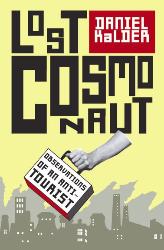
I just finished a book in that last category: Daniel Kalder's Lost Cosomonaut: Observations of an Anti-Tourist. I discovered it in a review at the Times Literary Supplement website. It is his first book in what I hope will be a prolific career. Kalder is a 20something Scot who has just returned from a five year stint working and travelling in the Russian Federation.

Kalder was not your typical tourist. He consciously rejected the I came, I partied, I got laid invasion route preferred by the Eurotrash. Instead, Kalder went to places that aren't listed in the Lonely Planet and Let's Go travel guides.

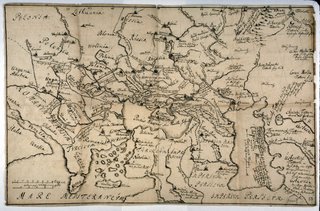
Finding his four destinations on current maps ain't easy. Tatarstan, Kalmykia, Mari El, and Udmurtia lie along the lower end of the Volga River. Huddled in the southeastern corner of Russia, these semi-autonomous republics are largely ignored by Moscow and entirely forgotten the rest of the world. Together they are part of what Kalder calls Shadow Europe.

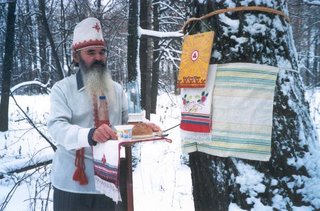
But adventure tourists beware! There is absolutely nothing to recommend these tiny republics. Whatever local authenticity there might have been faded long ago. The Russian Empire nearly wiped out the local pagan religions by imposing Orthodox Christianity. Later, the Soviet Union cruelly deported most of the native populations, replacing them with Russian settlers. Despite token Soviet efforts to promote quaint folk arts and crafts there was no room in the workers' paradise for authentic cultural diversity. Today, daily life is terribly nasty, thoroughly brutish, and desperately short.

Drawn to this Shadow Europe, Kalder is an anti-tourist. That makes his first book a uniquely fresh travelogue. During an all-night bender with fellow-travellers in Shymkent, the capital of South Kazakhstan Province, he declares the principles of Anti-Tourism.
As the world has become smaller so its wonders have diminished. There is nothing amazing about the Great Wall of China, the Taj Mahal, or the Pyramids of Egypt. They are as banal and familiar as the face of a Cornflakes Packet.

Consequently the true unknown frontiers lie elsewhere.

The duty of the traveller therefore is to open up new zones of experience. In our over explored world these must of necessity be wastelands, black holes, and grim urban blackspots: all the places which, ordinarily, people choose to avoid.

The only true voyagers, therefore, are anti- tourists. Following this logic we declare that:
  • The anti-tourist does not visit places that are in any way desirable.
  • The anti-tourist eschews comfort.
  • The anti-tourist embraces hunger and hallucinations and shit hotels.
  • The anti-tourist seeks locked doors and demolished buildings.
  • The anti-tourist scorns the bluster and bravado of the daredevil, who attempts to penetrate danger zones such as Afghanistan. The only thing that lies behind this is vanity and a desire to brag.
  • The anti-tourist travels at the wrong time of year.
  • The anti-tourist prefers dead things to living ones.
  • The anti-tourist is humble and seeks invisibility.
  • The anti-tourist is interested only in hidden histories, in delightful obscurities, in bad art.
  • The anti-tourist believes beauty is in the street.
  • The anti-tourist holds that whatever travel does, it rarely broadens the mind.
  • The anti-tourist values disorientation over enlightenment.
  • The anti-tourist loves truth, but he is also partial to lies. Especially his own.
What fascinates me about all this is Kalder's resemblance to Isaiah Berlin. Like Berlin, Kalder is a classic fox with a passion for seemingly contradictory, otherwise disconnected, things. Although he claims no interest in local history or current events, the book betrays a widely read, curious mind.

Kalder's voracious curiosity for the dark corners of humanity also parallels Berlin. The latter's defense of a live and let live liberalism was strongest when he invesitgated its obscure opponents. And to be frank, Berlin's descriptions of them were often more fascinating and ultimately more instructive than those of liberalism's defenders.

Perhaps it is their roles as consummate outiders; the Scottish European in southeastern Russia and the Latvian Jew in western Europe, that compels both Kalder and Berlin to explore of the shadowlands in the first place. Perhaps it also the source of their profound sympathies for lonely communities that struggle daily for survival largely unappreciated, if not unseen, by the wider world.

So why read The Lost Cosmonaut?

First, you'll discover the reason for its peculiar title. Second, you'll learn how not to be an asshole in other people's countries. Finally, it may convince you that going native in a desperate search for intimate connections is a contemptible delusion even for Kalder:
I didn't want to be a tourist. I wanted to be something more. But how can you ever be anything more than a tourist when you know you can leave? When you know, not that your stay is temporary, but that it need never not be temporary?

Labels: , ,

15.6.09

The nomadic alternative

wandering and wondering

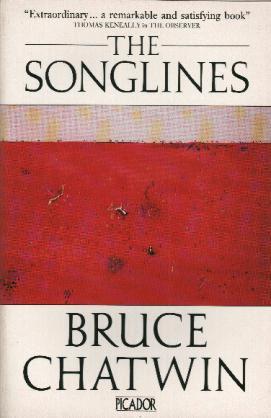
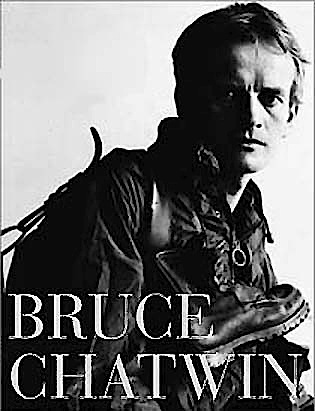
Back in 2006, I posted a NYTimes op-ed piece by David Brooks eulogizing the passing of the old school, streetwise skeptics of the Chicago press corps. It, as well as comments from a couple of readers I wrote about in Second thoughts, reminded me of the author, Bruce Chatwin. Although he was sometimes careless with the facts, his writing reflected a connoisseur's fascination with the gritty details of people's lives around the world. I guess that's why I've been reading him recently after a ten year hiatus.

In 1989, I first read Chatwin's The Songlines. It was the year I started grad school at the Unieversity of Illinois in Urbana-Champaign. It was also the year he died of what I later learned was AIDS. Not that I was ignorant of HIV/AIDS back in those early days of the epidemic. My cousin, a virologist living in Macon, GA, had just appeared in a photo for the National Geographic Magazine HIV/AIDS cover story ... or at least his hands did. They were in a photo of a rural AIDS hospice where my cousin was examining the residents.

Actually, the reason I was ignorant of Chatwin's illness is that he denied its cause until the last months of his life. Instead, he believed and convinced his family and closest friends that he had picked up a rare fungus in China. Even after it became apparent that this fungus was merely an opportunistic infection, Chatwin stoically refused to publicize his AIDS. His family and friends respected this silence.

Chatwin's death is a tragedy in both personal and literary terms. Salman Rushdie, a close friend who joined him on a road-trip through central Australia, has said that his books and essays, all of which dealt with travel as a way of life, have changed the way writers write and readers read travel books. Chatwin wouldn't have agreed though. He hated being pegged as a travel writer. He thought of himself as a writer who simply happened to travel ... a lot and everywhere.

Chatwin's great appeal for me lies in an apparent contradiction: he was a hedgehog with one big idea who pursued it like a fox. On the one hand, he believed that the nomads' travelling way of life is the natural state of humanity and having lost this for the most part, the world is now a more neurotic, violent place.

On the other hand, Chatwin rambled across six continents looking for this Nomadic Alternative. While many authors have written about exotic locales, from the comfortable security of their dens, Chatwin loved to visit them. Infamous for his non-stop, rapid chatter, he was yet a sensitive listener. He had intense discussions with a dizzying array of other travellers and writers as well as nomads, warriors, conquerors, cowboys, artists, shepherds, mystics, and mercenaries.

No matter how prickly or cautious the people he met, he wore down their defenses. No matter how confusing or murky the setting, he figured out what was really going on. Ultimately, Chatwin is an incredible storyteller; he combines the facts he observed with a brilliant imagination in a wholly novel and compelling way.

So I've returned to Bruce Chatwin as I write this blog. It seems to me that he offers a natural bridge between travel as a way of life and bikes as a means for travel. In purely Chatwinesque fashion, he asks questions... the right questions:
Why is man the most restless, dissatisfied of animals?

Why do wandering people conceive the world as perfect whereas sedentary ones always try to change it?

Why have the great teachers - Christ or the Buddha - recommended the Road as the way to salvation?

Do we agree with Pascal that all man's troubles stem from his inability to sit quietly in a room?
All I got to do now is answer them
by pointing my bike
in the right direction.
Yeah, yeah ...
it's a corny ending, I know %)

Labels: , ,

22.10.08

The true angels of Nottingham

or why
I'm a velopunk


Only barbarians are not curious about where they come from, how they came to be where they are, where they appear to be going, whether they wish to go there, and if so, why, and if not, why not.
and..
The very desire for guarantees that our values are eternal and secure in some objective heaven is perhaps only a craving for the certainties of childhood or the absolute values of our primitive past.
Isaiah Berlin

I was reminded of the quotes above by two encounters over the last few days. First, an old friend and colleague came to town for business. We got together for drinks and our usual wide-ranging conversation drifted into leisure activities. He expressed good-natured shock when I mentioned my velopunk exploits with the nattily clad gentleman cyclists, even going as far as to warn me of the likely diminution of my manliness. I hesitated to assert a robust commitment to biking might just be the thing for reducing his own rather overly amble manliness. Instead, I smiled and wandered into another topic.

A little later, a fellow velopunk and gentleman cyclist sent me an email about my recent post, How the angels built bikes. He suggested I look at a couple of websites featuring photos of Nottingham's vanished bike industry. In contrast to the Ray Teece's wonderful photo essay of Raleigh industries architecture, Chris Richards's Raleigh Photographs (from which this post's photos are borrowed) focuses more on the true angels who built our worthy steeds. For example, the men in white (above) are the Raleigh Industries Cricket Team. It's now sadly absent as a worthy, working-class opponent for the more toffy Nottinghamshire County Cricket Club.

So in a delayed response to my old friend & colleague: isn't amazing that there's a rare species of bike enthusiasts who do not simply retire to the garage, basement, or workshop to bask in the glow of their iron bitches? Who instead bask in the glow of their own sweaty brows and in the warmth of their woolen togs during the semi-annual rites of lightweight touring. We, who risk the opprobrium of unsure families and uncomprehending friends as well as strangers, cagers, and pedestrians, cheerfully don breeks of tweed and socks of lengthy dimension to face the open road on lugged steel considerably older than ourselves.

...and each one built by men (and women), like those to the left. Few of us velopunks, whether of British extraction or inclination, despite an unfortunate accident of birth in the colonies, have met even one these true Angels of Nottingham. It fact, it's doubly unfortunate. Who amongst us hasn't scratched his considerably perspired noggin trying to figure out why the two sides of a front axle are threaded in opposite directions? What we wouldn't give for two or three hours of ale-inspired instruction from one or two of these wise craftsman.

More unfortunate, however, is the fading of their personal and collective histories. This is, I think, what has motivated Chris. This is a 1975 picture of his father, Harry. According to Chris, it as well as the others he has posted were taken by Terry Radford, who started at the Cycle Road 3-speed assembly shop as a youth in 1956. He knew my late father ... who looked after young Terry and the other apprentices in the factory. I must confess I get a little shivery thrill when I think that my original 1962 Robin Hood may have been built by one of these men. Certainly it's a shame that nearly all of the Raleigh Industries buildings are long gone beneath suburban redevelopment. That's where the 2nd Berlin quote comes in. To wit, [t]he certainties of childhood or the absolute values of our primitive past rarely survive. But that doesn't mean that a few stalwart velopunks can't remember and even celebrate the memories of such things. Besides, I've got to go and clean up the rusty chrome on my new acquisition, a 1930s Accels & Pollock Handlebar Stem.

Labels: , ,

17.4.08

Why the bike riders?

think Yiddish,
roll British


A story told amongst many post-WWI Talmud students:
In 1936 an elderly Jew was walking down a lonely street in Berlin. Suddenly he was accosted by three burly Nazi ruffians, who taunted him. One demanded angrily: "Isn't it true, old man, that the Jews are the cause of all the problems we now have in Germany?" The old man, no fool, replied, "Actually, it's the Jews and the bike riders."


The irate hooligan looked puzzled and asked "Why the bike riders?"
The old man replied:

Labels: , ,

9.4.08

Not just about bikes

there are hedgehogs
& foxes too


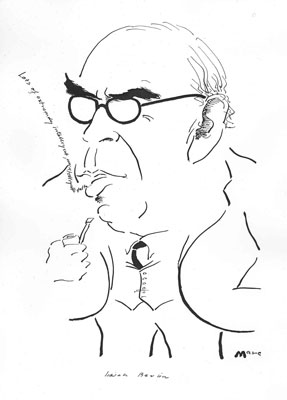
What does any of this have to do with Sir Isaiah Berlin? A large proportion of my 1000+ books deals with the very issues Berlin raised in his long career in the UK as the 20th Century's greatest liberal philosopher. Borrowing from the Greek poet, Archilochus, he divided his fellow philosophers into two groups: the foxes who know many things and the hedgehogs who know one big thing.

Most of us who love to think about the world around us struggle over whether we're one or the other ... or perhaps both from time to time. And that's why I have this blog: I'm a fox who wishes that he were a hedgehog. Besides, putting Berlin's ideas together with books and bikes is something your typical fox would do.

Labels: , ,

9.10.07

The longshoreman & the Oxford don

Berlin & Hoffer

Isaiah Berlin
1909-1997
Those who have ever valued liberty for its own sake believed that to be free to choose, and not to be chosen for, is an inalienable ingredient in what makes human beings human.

But to manipulate men, to propel them towards goals which you-the-social-reformers see, but they may not, is to deny their human essence, to treat them as objects without wills of their own, and therefore to degrade them.
Eric Hoffer
1902-1983
The basic test of freedom is perhaps less in what we are free to do than in what we are free not to do. People unfit for freedom - who cannot do much with it - are hungry for power. The desire for freedom is an attribute of a "have" type of self. It says: leave me alone and I shall grow, learn, and realize my capacities. The desire for power is basically an attribute of a "have not" type of self.

Labels: , , ,

24.8.07

Bruce Chatwin

fox & hedgehog

Last year, I posted a NYTimes op-ed piece by David Brooks eulogizing the passing of the old school, streetwise skeptics of the Chicago press corps. It, as well as comments from a couple of readers I wrote about in Second thoughts, reminded me of the author, Bruce Chatwin. Although he was sometimes careless with the facts, his writing reflected a connoisseur's fascination with the gritty details of people's lives around the world. I guess that's why I've been reading him recently after a ten year hiatus.

In 1989, I first read Chatwin's The Songlines. It was the year I started grad school at the Unieversity of Illinois in Urbana-Champaign. It was also the year he died of what I later learned was AIDS. Not that I was ignorant of HIV/AIDS back in those early days of the epidemic. My cousin, a virologist living in Macon, GA, had just appeared in a photo for the National Geographic Magazine HIV/AIDS cover story ... or at least his hands did. They were in a photo of a rural AIDS hospice where my cousin was examing the residents.

Actually, the reason I was ignorant of Chatwin's illness is that he denied its cause until the last months of his life. Instead, he believed and convinced his family and closest friends that he had picked up a rare fungus in China. Even after it became apparent that this fungus was merely an opportunistic infection, Chatwin stoically refused to publicize his AIDS. His family and friends respected this silence.

Chatwin's death is a tragedy in both personal and literay terms. Salman Rushdie, a close friend who joined him on a roadtrip through central Australia, has said that his books and essays, all of which dealt with travel as a way of life, have changed the way writers write and readers read travel books. Chatwin wouldn't have agreed though. He hated being pegged as a travel writer. He thought of himself as a writer who simply happened to travel ... a lot and everywhere.

Chatwin's great appeal for me lies in an apparent contradiction: he was a hedgehog with one big idea who pursued it like a fox. On the one hand, he believed that the nomads' travelling way of life is the natural state of humanity and having lost this for the most part, the world is now a more neurotic, violent place.

On the other hand, Chatwin rambled across six continents looking for this Nomadic Alternative. While many authors have written about exotic locales, from the comfortable security of their dens, Chatwin loved to visit them. Infamous for his non-stop, rapid chatter, he was yet a sensitive listener. He had intense discussions with a dizzying array of other travellers and writers as well as nomads, warriors, conquerors, cowboys, artists, shepards, mystics, and mercenaries.

No matter how prickly or cautious the people he met, he wore down their defenses. No matter how confusing or murky the setting, he figured out what was really going on. Ultimately, Chatwin is an incredible storyteller; he combines the facts he observed with a brilliant imagination in a wholly novel and compelling way.

So I've returned to Bruce Chatwin as I write this blog. It seems to me that he offers a natural bridge between travel as a way of life and bicycles as a means for travel. In purely Chatwinesque fashion, he asks questions... the right questions:
Why is man the most restless, dissatisfied of animals?

Why do wandering people conceive the world as perfect whereas sedentary ones always try to change it?

Why have the great teachers - Christ or the Buddha - recommended the Road as the way to salvation?

Do we agree with Pascal that all man's troubles stem from his inability to sit quietly in a room?
All I got to do now is answer them by pointing my bike in the right direction. Yeah, yeah ... it's a corny ending, I know %)

Labels: , , ,

17.7.07

More on Akhmatova

and Isaiah Berlin

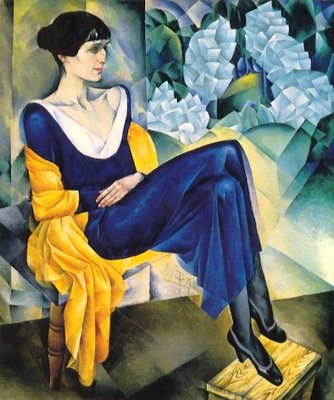
I've been in poetical mood these last few days. So bear with me. I'm not the only one who has spent a sleepless night or two reading the bards. And this is what I read about several years ago: a clandestine Moscow meeting between Isaiah Berlin and his intellectual paramour, the great Russian poet, Anna Akhmatova.

Yes, yes. I go on and on about him. Berlin, I read to understand; but Akhmatova I read to survive. And crazy indeed, they both met one fateful night just at the end of WWII in Leningrad, now St. Petersburg ... again. For just one short evening: no sex, maybe flirtation, just talk. Well, that's what they said at least. Nobody knows for sure. But every one wonders what exactly happened like John Stallworthy.
a triptych
1940-1988
Leningrad-Tashkent-

Moscow-Oxford


1
Foreword
In November 1945, Isaiah Berlin, then First Secretary at the
British Embassy in Moscow, was visiting Leningrad and learnt
from a conversation in a bookshop that Anna Akhmatova was
living nearby. Telephoned, she invited him to call at her flat in the
old Fontanny Palace on the Fontanka.

Their meeting that afternoon was interrupted, as he describes in his Personal Impressions:
‘Suddenly I heard what sounded like my first name being shouted somewhere outside.
I ignored this for a while - it was plainly an illusion - but the shouting became louder
and the word "Isaiah" could be clearly heard. I went to the window and looked out,
and saw a man whom I recognized as Randolph Churchill. He was standing in the
middle of the great court, looking like a tipsy undergraduate, and screaming my name.'
Berlin hurriedly led him away, but himself returned that evening to continue his
conversation with the poet.

They talked all night of their respective Russian childhoods, of such of her early
friends as Modigliani and Salomé Andronikova, of the war, of Tolstoy,
of what she had written - and read him - of ‘Poem without a Hero'.
In the small hours of the morning they were joined by her son, Lev Gumilev,
bringing the only food they had in the flat.

This meeting, because of Churchill's interruption, came to Stalin's attention
(‘So our nun is receiving visits from foreign spies'), altering the course of
Akhmatova's life and, she believed, the course of history. She became
convinced that, fuelling Stalin's paranoia, they had caused the
first move in the Cold War.


Berlin came to say goodbye to her, before leaving the Soviet
Union, on 5 January 1946. The next day, uniformed men screwed
a microphone into her ceiling. That summer she was denounced
by the Central Committee of the Communist Party and expelled
from the Writers' Union.

On 6 November 1949, her son Lev was arrested for the third time and
the following day Akhmatova committed her poems finally to memory
before burning their manuscripts; among them, the completed
‘Poem without a Hero' in which Berlin appears as ‘The Guest from the Future'.

2
The doorbell a tocsin tolling
as if the Huns were at the gate
told nothing that was not foretold
in this room and on this date

when the stranger turned left from the bridge
along the Fontanka and knew
the gates by the iron lions
that growled and let him through

Who shadowed him Lachesis
the Eumenides knowing what now
I know and do not know where they
have taken you and if But how

gladly I heard his step
on the stair his touch on the bell
as shy as a boy's fingertip
touching his first girl

He brought me no lilac no ring
but something more precious than love
As the terrible downpour ceased
he brought me like Noah's dove

a green word out of the blue
A Russian bird rinsing the air
of its thunder and ash and if
he flew off he returned later

and Europe again put out her leaves
behind my Amedeo's head
the drawing on his knee my wall
Modigliani famous dead

He brought me leaves and he brought
me stone He brought me Salomé
back from the dim pharaonic vault
of the Stray Dog cabaret

and up it seemed the deeper stairs
those others had descended who
as memory turned the key
came at her shadow trooping through

the hall to meet the guest whom I
admitted to the Masquerade
when destiny called the tune
But whose was the tune I played

the music to which we moved
in the candlelight pouring wine
dividing between us the clutch
of potatoes your hand and mine

and his hand with a cigar
conducting Something by Mozart
Donna Anna dreams a dream
Footsteps and the dreams depart

He brought me leaves and he brought
me stone a guest of stone
to drag you from the candlelight
Now Donna Anna sits alone

and will do what must be done
if you in some cage tonight
are to lie beyond the range
of the poem's fatal flight

Let it be lettered in flame
translated into air
to be printed and reprinted
anytime anywhere

under roof or under stars
on the one press that survives
the listeners the watchers
the searchers with their knives.

3
From the year 1940 I look
As if down from a tower on it all,
As if I were taking leave again
Of all I look leave of long ago,
As if I had made the sign of the cross
And went to the vaults below.

25 August 1941
Leningrad under siege

New Year's Eve. The Fontanny Palace. Instead
of the man expected, shades of 1913 appear to
the author in the shape of mummers. A white hall
of mirrors. Lyrical digression: the Guest from
the Future. A Masquerade. A Poet. A Ghost.


I have lit my sacred candles
To halo the New Year,
And I welcome 1941
With you who do not appear.

Good God!
The flames drown in crystal
‘And the wine like poison burns'.
Rough shards of speech resurface
And old hysteria returns
And the clock still does not strike . . .
In mounting anxiety
Like a shadow on the threshold
I guard my sanctuary.

I hear a bell's insistent ring
And feel my blood run colder,
And turned to stone, ice, fire,
I look over my shoulder
As if remembering something,
And in a low voice say:
‘I'm sorry. The Doges' Palace
Is next door, but today
You might as well leave all
Your masks and cloaks, your crowns
And scepters in the hall.
I've a mind to sing your praises,
New Year's Eve hell-raisers.'
Here is Faust, and here Don Juan,
Dapertutto, Iokanaan,
And here the Nordic Glahn,
Or the murderer Dorian,
All of them whispering
To their Dianas some
Old Story. One has brought
A Bacchante with a drum.
And the walls have opened for them,
Light has erupted, sirens wail,
The ceiling swells to a dome.
As if scandal could make me quail . . .
What to me are Hamlet's garters!
Or the dance of Salomé
Or the Man in the Iron Mask!
I am more iron than they . . .
And whose turn now to be afraid,
To back away, wince guiltily,
And ask forgiveness for old sins?

I see:
What do they want, but me?
Supper was not laid for them,
And our worlds are not the same.
Those coat-tails conceal a tail . . .
How elegant he is, how lame . . .
But . . . surely you have not dared
To bring the Prince of Darkness here?
That face or mask or skull
Displays an anguished sneer
That only Goya would dare paint.
Prince Charming, Prince Derision -
Compared with whom, the worst
Of sinners is a saint . . .
On with the carnival!
But why am I alone alive?
Tomorrow morning I shall wake
And no indictments will arrive,
And the blue beyond my windows
Will laugh into my face.
But I am frightened; shall go in
Hugging my shawl, my lace,
Smile at them all and say nothing.
I do not want to meet again
This side of Jehosophat
The woman that I was then
In a necklace of black agate.
Can the Last Day be here . . . ?
I have forgotten your lessons,
False prophets of yesteryear,
But you have not forgotten me.
The future in the past draws breath
As the past in the future rots -
Dead leaves in a dance of death.

The sound of invisible feet,
Cigar smoke blue in the air
Over a parquet floor,
And in all the mirrors there
The man who did not appear
And could not enter that hall.
A man much the same as the rest,
The grave had not made his flesh crawl
And there is warmth in his hand -
My Guest from the Future - a light
In his eye. Will he really come,
Turning left from the bridge, tonight?

4
Tonight and every night the bell
the stove and the candles burn
Before the tocsin tolls again
hell-raisers must return

The stove window reddens
with a city in flames
redoubled in a river
the Moskvá Nevá Thames

debouching into Phlegethon

I saw there some up to their eyes in blood
and the great centaur told me These are the tyrants
who from mass-murder made a livelihood

They choke in the smoking torrents
from springs they unstopped themselves
Napoleon is treading blood
the vintage of 1812

That swastika forelock signals
dreams of a higher race
The blood of jews and gypsies
accuses him to his face

and there is the Children's Friend
islanded in midstream
eyelids moustache encrusted
but that is not his scream

Great centaur shaper of war and peace
what of your argument
that power is the people's will
transferred with their consent

to him and him and him Because
you legitimate their claims
you do your sentry duty
in this abyss of flames

I have called you too a monster
and hated you with all my heart
but in the night of history
you played a homeric part

Under the comet's peacock tail
your city like Homer's Troy
is still an active volcano
a city flame cannot destroy

a torch by whose shuddering light
you show me what you were shown
a road a blizzard prisoners
turned in their sleep to stone

Great centaur I thought of you
and the prisoners I thought of them
in the line that shuffled towards
my smouldering Requiem

And so it begins again
the snow starting to fall
At a darkened window I look
as if down from a tower on it all

as if I were taking leave again
of all I took leave of long ago
my son dragged out by a stone guest
a pattern without purpose No

The pattern must be the shadow
of purpose by which I know
that my Guest from the Future turned
left from the bridge because Clio

dictated it she who dictated
the lines on a page of snow
in a wind too cold to let
the tears it loosened flow

preserving them for a future
the past may no longer rot
when spring winds can bear witness
to what the chronicles do not

Labels: , , , ,

9.7.07

Retread

a blast from the past
When I moved to the City of Big Shoulders in 2000, I brought with me over a thousand books. The challenge for the movers was getting them up four flights of stairs without the benefit of an elevator. They brought the boxes up three or four at a time on their backs supported by a tump line. They asked why I had so many god-damned books. I said they were my tools just like good mechanics who have their own personal set of wrenches they would never go anywhere without. More on that later...
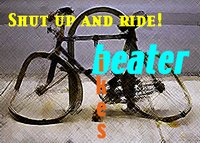
I also came with a red Saturn Coup. It sat in front of the apartment gathering dust and bird shit for two years as I took full advantage of the CTA. I finally got rid of the Saturn when the Connecticut Department of Revenue (where I had moved from) sent me the annual luxury tax assessment on it. I paid the tax and cancelled the lease which was a stupid idea to have in the first place. And then I got a 1957 Raleigh 3-speed Robin Hood from the Working Bikes Co-operative down on the southside. And it's been "two wheels good, four wheels bad" ever since. More on that later...
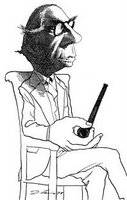
What does
any of this
have to do
with Sir Isaiah Berlin?


That's what this blog is for. A large proportion of my 1000+ books deals with the very issues Berlin raised in his long career in the UK as the 20th Century's greatest liberal philosopher. Borrowing from the Greek poet, Archilochus, Berlin divided his fellow philosophers into two groups: the foxes who know many things and the hedgehogs who know one big thing. Most of us who love to think about the world around us struggle over whether we're one or the other ... or perhaps both from time to time. And that's why I've started this blog: I'm a fox who wishes that he were a hedgehog. Besides, putting his ideas together with books and bicycles is something your typical fox would do.
Blogs are surprising things. Unlike writing a book or an essay there isn't any predetermined structure. Like an old school diary you start out with one thought or goal and end up writing about something else altogether. Try as I might, I have yet to post an entry in which my initial intentions match the finished product. This is why I think blogs are the perfect vehicles for us foxes who know a lot of little things.
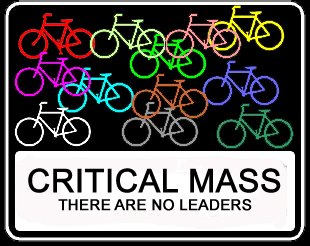
Take today's entry for example. I originally intended to write about the more personal journey of how I got into biking in the first place and then relate it to xerocracy. It's a term I first heard at Chicago Critical Mass. I did some googling to find out what it means. Essentially, it refers to anarchistic communities in which there are no leaders. All voices are welcome. All responsibilities are mutually shared. A number of websites also claim it is the (dis)organizing principle for Critical Mass.
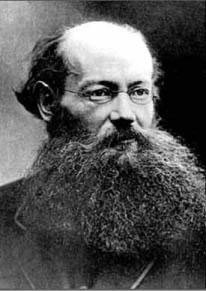
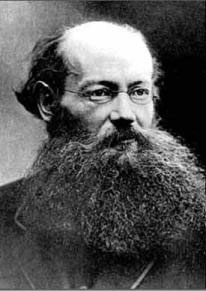
It reminded me of mutual aid, the anarchist concept promoted by 19th Century Russian intellectual, Peter Kropotkin. I think it could do a lot for fleshing out how xerocracy actually works in the critical mass world. So I started googling mutual aid and Kropotkin. That took me to Wikipedia. It quotes Kropotkin's definition of mutual aid as
... a system of economics based on mutual exchanges made in a system of voluntary cooperation.
But like the fox I am, I haven't quite connected my own reasons for biking with xerocracy. I need some time to noodle it around in my head. It will, nevertheless, most defintitely happen with the help of Kropotkin and mutual aid.
So let me tell you how I got into biking. I was a professor at a small liberal arts college in northeastern Wisconsin. Me and my wife, also a professor there, lived close to a fairly rural, small town campus. Riding up over the bridge everyday seemed just the thing. In fact, I had delusions of grandeur imagining myself living a 1990s version of the movie, Goodby, Mr. Chips.
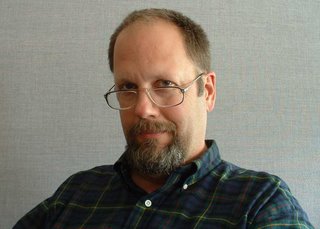
One small problem: I didn’t have a bike, didn’t know much about bikes, and wasn’t too enthusiastic about shelling out the big bucks for a fancy new bike. Luckily, another old college buddy, also named Dave, was visiting from Ohio with his wife and two boys. He’d been working on bikes for years in an old barn on what’s left of his family’s farm. Before they came up, Dave's wife had lovingly given him an ultimatum: "Get rid of some of the bikes, so at least we can get into the barn!"
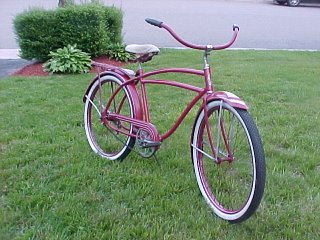
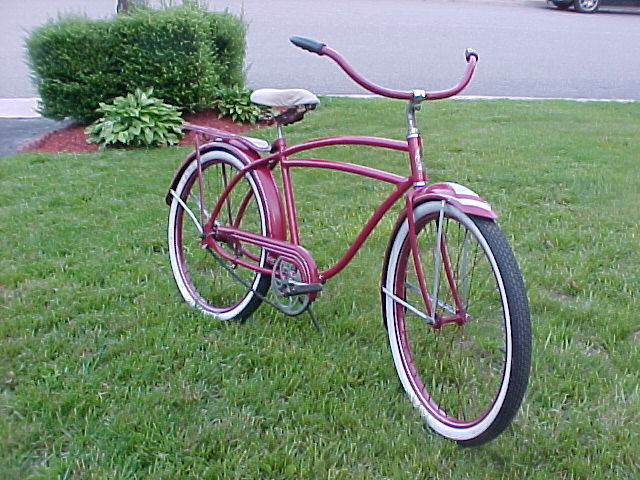
That's why Dave brought a Roadmaster to give to me. He’d done a wonderful restoration job. The thing was huge, blue, and heavy as hell. I got the jpeg of this one off Ebay. Best of all – it was free. I rode the blue beast to my college office almost every day. After work and on the weekends, I rode down to a bike path along the Fox River and back. Then I started branching out to the north towards Green Bay and to the south towards Appleton. I eventually had to mothball it when a mechanic discovered that my increasingly frequent flats were due to shot rims.

At the same time, about six years ago, my marriage started going south. I bought a new hybrid mountain bike are started seriously racking up the miles. Needless to say, I no longer have that bike or a wife. Therein, as the saying goes, lies a tale.
This fox, however, is stopping here to go read Kropotkin's Appeal to the Young. Follow the link while I noodle the connections between biking, xerocracy, mutual aid, and me!
Labels: , ,