Bicycle Diaries

Recent Posts

16.2.10

their passions a quotation

w/apologies
to Oscar Wilde

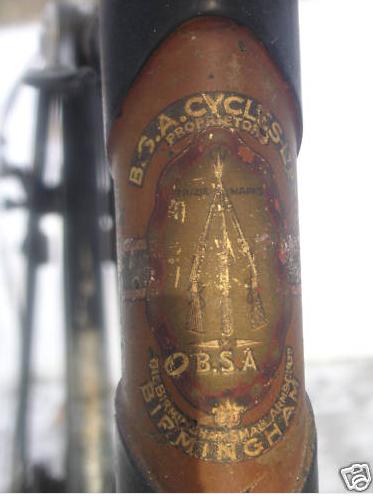
As I hit the mid-February dull-drums, I've been turning my head towards spring with a little restoration project. It's not only keeping me from self-medicating the darkness away in my local neighborhood joint. There's nothing like scouring several decades worth of rust off steel rims for ruminating about the vélotariat.
  • Why do researchers who've never been on Critical Mass write as if it just popped out of nowhere on the streets of America?
  • Why do they typically recycle masser statements about the anarchy and celebration without ever going deeper beneath the surface?
  • And why do they never explain the mass's staying power, now in it's second decade and spreading around the world?
  • In other words, where the hell did the mass come from and where the hell is it going?

    The simple answer is that Critical Mass began in 1992 in San Francisco. Seven years later, it appeared in Chicago. Most academic research concludes that it's the anarchistic step-child of the aging hippies and student protesters of the 60s. That's usually where it ends.

    Although a good start, refusing to go further ignores the rich history of bike activism both during and after the heyday of counter-culture America. In Chicago, Keith Kingbay was bugging Mayor Daley the Elder for bike lanes which first went in the early 1970s. Hippy longhair? Wild-eyed radical? Not in the least: Keith was the Cycling Activities Director for the Schwinn Bicycle Company and member of President Nixons's Council on Physical Fitness.

    So where to go from here? On to Humboldt Park. Lula's was getting ready for the dinner rush. I decamped to the Black Beetle Bar & Grill in Humboldt Park. There I discovered an obscure (to Americans at least) Parisian group that gave the May 1968 student revolt its intellectual uhmpf. And quite surprisingly, Kingbay seems to have been familiar with many of their essays.

    Led by Guy Debord, The Situationists came down hard on Western society. France had finally emerged from the poverty and despair of the post-WWII period. Rebuilding war-ravaged cities and villages was almost complete. Unemployment was virtually non-existent. Under De Gaulle, France was a serious US Cold War partner. The baby-boom generation was flooding the universities ... and it was bored, angry, and primed for action.

    In contrast to today's conservative revisions of history, the Situationists were much more than a group of spoiled middle class kids. The French were in Algeria. The Soviets were in Czechoslovakia. The US was in Viet Nam. Countries in Africa and Latin America were struggling for national independence or true sovereignty from former colonial masters. Western governments, as well as the traditional opposition parties that did little real opposing, demanded loyalty, rather than questions, from their supporters. They specifically demanded young people to Sois Jeune et Tais Tois, or Be young and shut up.
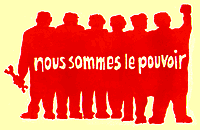
    It was a mistake to say the least. In this grossly patronizing atmosphere, youthful opposition to foreign policy quickly grew into an overall critique of Western society. Like the revolutionary movements of the 1920s and 1930s the Situationists focused on the power of capitalism, propped up by the state, to overwhelm individual freedom. Unlike their predecessors who sought to revolutionize politics, they sought to revolutionize life itself.
    Raoul Vaneigem, in The Revolution of Everyday Life, observed that poverty in modern Western society went deeper than simple economic depravation. Social conventions, reinforced by political institutions and an all-encompassing media, compelled individuals to not only consume but what to consume and how. Locked in this daily routine of consumption, life was futile, barren, and dull.
    The history of our times calls to mind those Walt Disney characters who rush madly over the edge of a cliff without seeing it, so that the power of their imagination keeps them suspended in mid-air; but as soon as they look down and see where they are, they fall.
    What does this have to do with Critical Mass? The creative, spontaneous, and joyful potential of the human imagination was crushed everywhere in Western societies especially on the very streets of its large cities. Well before the San Fancisco Critical Mass, Debord highlighted the subtle connections between what he called the Spectacle of modern life and the automobile. In fact, his nine Situationist Theses on Traffic reads as if it were a Critical Mass manifesto.
    1. A mistake made by all the city planners is to consider the private automobile (and its by-products, such as the motorcycle) as essentially a means of transportation. In reality, it is the most notable material symbol of the notion of happiness that developed capitalism tends to spread throughout the society. The automobile is at the center of this general propaganda, both as supreme good of an alienated life and as essential product of the capitalist market: It is generally being said this year that American economic prosperity is soon going to depend on the success of the slogan "Two cars per family."

    2. Commuting time, as Le Corbusier rightly noted, is a surplus labor which correspondingly reduces the amount of "free" time.

    3. We must replace travel as an adjunct to work with travel as a pleasure.

    4. To want to redesign architecture to accord with the needs of the present massive and parasitical existence of private automobiles reflects the most unrealistic misapprehension of where the real problems lie. Instead, architecture must be transformed to accord with the whole development of the society, criticizing all the transitory values linked to obsolete forms of social relationships (in the first rank of which is the family).

    5. Even if, during a transitional period, we temporarily accept a rigid division between work zones and residence zones, we must at least envisage a third sphere: that of life itself (the sphere of freedom and leisure — the essence of life). Unitary urbanism acknowledges no boundaries; it aims to form an integrated human milieu in which separations such as work/leisure or public/private will finally be dissolved. But before this is possible, the minimum action of unitary urbanism is to extend the terrain of play to all desirable constructions. This terrain will be at the level of complexity of an old city.

    6. It is not a matter of opposing the automobile as an evil in itself. It is its extreme concentration in the cities that has led to the negation of its function. Urbanism should certainly not ignore the automobile, but even less should it accept it as its central theme. It should reckon on gradually phasing it out. In any case, we can envision the banning of auto traffic from the central areas of certain new complexes, as well as from a few old cities.

    7. Those who believe that the automobile is eternal are not thinking, even from a strictly technological standpoint, of other future forms of transportation. For example, certain models of one-man helicopters currently being tested by the US Army will probably have spread to the general public within twenty years.

    8. The breaking up of the dialectic of the human milieu in favor of automobiles (the projected freeways in Paris will entail the demolition of thousands of houses and apartments although the housing crisis is continually worsening) masks its irrationality under pseudopractical justifications. But it is practically necessary only in the context of a specific social set-up. Those who believe that the particulars of the problem are permanent want in fact to believe in the permanence of the present society.

    9. Revolutionary urbanists will not limit their concern to the circulation of things, or to the circulation of human beings trapped in a world of things. They will try to break these topological chains, paving the way with their experiments for a human journey through authentic life.

    Labels: , ,

    25.12.09

    Merry Xmas!

    another vid from
    the Vulgar Lad


    Labels: , ,

    8.12.09

    Shoppers Beware...

    cycling Santas
    are coming

    to town!


    The Windy City's Annual Santa Cycle Rampage
    Plows into Tenth Year

    The tenth anniversary Santa Cycle Rampage will roll out from Twisted Spoke Bar and Grill at noon on Saturday, 12 December 2009. Several dozen cycling Santas will make their way toward the magnificent mile in a boisterous, spirited procession, and descend on holiday shoppers in a blitz of toasted holiday cheer to remind one and all of the joy of human‐powered travel. The Santa Cycle Rampage is an annual event promoted by Chicago Bike Winter as part of a campaign to promote the bicycle as year‐round transportation.

    According to Martin Hazard, 2010 Bikewinter co‐chair, the ride is intended not to befuddle bystanders, but to send a clear message that one does not need to buy a large, expensive, emissions‐heavy vehicle in order to tank up for the holidays. Hazard reports that, under the influence of the Chicago Santa Cycle Rampage, other cities such as Milwaukee have wasted no time in starting their own Santa Cycle Rampages, and that this year’s ride has been carefully tweaked in order to make sure its message is hammered home to holiday shoppers.

    Participants will meet at 11 A.M. at the start venue to slop up for the ride; anyone with a working bike and a Santa suit is welcome to participate. In past years rogue Dreidels, Elves, and Reindeer have also ridden along.

    Contacts/info: Chair@bikewinter.org
    773/710‐4143

    www.bikewinter.org/events/rampage

    Labels: , ,

    29.11.09

    Full Moon Fiasco XII

    Silent Night...
    My Ass!!!


    Whether snow, sleet, rain, flood, or just cold as shit:

    Wednesday, 2 December 2009
    Gannon's Pub @8pm

    Though sometimes late, we never cancel a ride.

    Labels: , ,

    24.10.09

    Remember, remember...

    the 7th of November


    Well, it's supposed to be on the 5th when the Brits captured poor Guido, AKA Guy, in the cellars of Parliament. But that's a school night so we're doing it on Saturday, when he finally admitted to The Gun Powder Plot after some extreme interrogation methods. In any case, Viscount Wallace has submitted preliminary details here!

    Remember, remember the Fifth of November,
    the Gunpowder Treason and Plot,

    I see no reason why Gunpowder Treason should ever be forgot.
    Guy Fawkes, t’was his intent to blow up King and Parliament.


    Three score barrels were laid below to prove old England’s overthrow;
    By God’s mercy he was catch’d with a dark lantern and lighted match.

    Holloa boys, holloa boys, let the bells ring.
    Holloa boys, holloa boys, God save the King!

    Hip hip hoorah!

    A penny loaf to feed the Pope
    A farthing o’ cheese to choke him.

    A pint of beer to rinse it down.
    A faggot of sticks to burn him.

    Burn him in a tub of tar.
    Burn him like a blazing star.

    Burn his body from his head.
    Then we’ll say ol’ Pope is dead.

    Hip hip hoorah!
    Hip hip hoorah hoorah!

    Labels: , ,

    13.5.09

    Full Moon Fiasco Ride!

    every full moon,
    never cancels


    The FBC-Chicago now has a monthly (or nearly monthly) ride--the Full Moon Fiasco. It is exactly what it sounds like, no hidden gimmicks. Come join 'em, drink some beer, ride a little, drink more beer, take some pictures to put on their blogspot, etc, etc, etc ...

    2009 Full Moon Calendar

    7 Jun
    7 Jul
    6 Aug
    4 Sept
    4 Oct
    2 Nov2
    2 Dec
    31 Dec

    Labels: , ,

    10.5.09

    Star Trek

    alternate
    trailer?


    Labels: , ,

    10.4.09

    The crucifixion considered as an Uphill Bicycle Race

    thoughts on Good Friday
    by Alfred Jarry

    Barabbas, slated to race, was scratched.

    Pilate, the starter, pulling out his clepsydra or water clock, an operation which wet his hands unless he had merely spit on them -- Pilate gave the send-off.

    Jesus got away to a good start.

    In those days, according to the excellent sports commentator St. Matthew, it was customary to flagellate the sprinters at the start the way a coachman whips his horses. The whip both stimulates and gives a hygienic massage. Jesus, then, got off in good form, but he had a fiat right away. A bed of thorns punctured the whole circumference of his front tire.

    Today in the shop windows of bicycle dealers you can see a reproduction of this veritable crown of thorns as an ad for puncture-proof tires. But Jesus's was an ordinary single-tube racing tire.

    The two thieves, obviously in cahoots and therefore "thick as thieves," took the lead.

    It is not true that there were any nails. The three objects usually shown in the ads belong to a rapid-change tire tool called the "Jiffy."

    We had better begin by telling about the spills; but before that the machine itself must be described.

    The bicycle frame in use today is of relativelv recent invention. It appeared around 1890. Previous to that time the body of the machine was constructed of two tubes soldered together at right angles. It was generally called the right-angle or cross bicycle. Jesus, after his puncture, climbed the slope on foot, carrying on his shoulder the bike frame, or, if you will, the cross.

    Contemporary engravings reproduce this scene from photographs. But it appears that the sport of cycling, as a result of the well known accident which put a grievous end to the Passion race and which was brought up to date almost on its anniversary by the similar accident of Count Zborowski on the Turbie slope -- the sport of cycling was for a time prohibited by state ordinance. That explains why the illustrated magazines, in reproducing this celebrated scene, show bicycles of a rather imaginary design. They confuse the machine's cross frame with that other cross, the straight handlebar. They represent Jesus with his hands spread on the handlebars, and it is worth mentioning in this connection that Jesus rode lying flat on his back in order to reduce his air resistance.

    Note also that the frame or cross was made of wood, just as wheels are to this day.

    A few people have insinuated falsely that Jesus's machine was a draisienne , an unlikely mount for a hill-climbing contest. According to the old cyclophile hagiographers, St. Briget, St. Gregory of Tours, and St. Irene, the cross was equipped with adevice which they name suppedaneum. There is no need to be a great scholar to translate this as "pedal."

    Lipsius, Justinian, Bosius, and Erycius Puteanus describe an other accessory which one still finds, according to Cornelius Curtius in 1643, on Japanese crosses: a protuberance of leather or wood on the shaft which the rider sits astride -- manifestly the seat or saddle.

    This general description, furthermore, suits the definition of a bicycle current among the Chinese: "A little mule which is led by the ears and urged along by showering it with kicks."

    We shall abridge the story of the race itself, for it has been narrated in detail by specialized works and illustrated by sculpture and painting visible in monuments built to house such art. There are fourteen turns in the difficult Golgotha course. Jesus took his first spill at the third turn. His mother, who was in the stands, became alarmed.

    His excellent trainer, Simon the Cyrenian, who but for the thorn accident would have been riding out in front to cut the wind, carried the machine.

    Jesus, though carrying nothing, perspired heavily. It is not certain whether a female spectator wiped his brow, but we know that Veronica, a girl reporter, got a good shot of him with her Kodak.

    The second spill came at the seventh turn on some slippery pavement. Jesus went down for the third time at the eleventh turn, skidding on a rail.

    The Israelite demimondaines waved their handkerchiefs at the eighth.

    The deplorable accident familiar to us all took place at the twelfth turn. Jesus was in a dead heat at the time with the thieves. We know that he continued the race airborne -- but that is another story.

    Labels: , ,

    5.4.09

    The Queen's Tweed Ride

    FIND UPDATE HERE!
    Saturday
    , 2 May 2009


    Although I'm shivering in anticipation of tonight's last middle finger of winter, my thoughts are certainly turned towards spring. And so, inspired by The London Fixed-Gear and Single-Speed Forum's Tweed Run and challenged by San Francisco's Thursday Tweed Ride, I would like to announce the 1st Annual Queen's Tweed Ride! This celebration of herringbone, hip flasks, and our noble steeds will be hosted by British Bicycles of Chicago, or the BBC.


    The auspicious day will also mark the 40th anniversary of RMS Queen Elizabeth II's maiden voyage to the colonies. The route, which is still in planning, will take us past (and into) some of The Windy City's most infamous (and still open) speakeasies. Where else but in these lively establishments would the ladies & gents find more bracing refreshments and hearty victuals?

    As with our fellow tweed runs, we hope to offer small, but significant, prizes for
    Most Dapper Chap

    Most Snappy Lass

    Most Stylish Noble Steed

    Most Inspired Interpretation of Tweediness

    Best Mustache
    (open to both lads and inventive lasses)

    Labels: , ,

    12.2.09

    Vélo-buse

    Paris Vélib on
    the Highway to Hell

    After 18 months, the alternative transport crowd in Paris has learned a painful lesson that every car rental company in the world has known for years. A lot of folks are hard on their rentals. Even I in my younger years as a cager enjoyed nothing more that grinding my rental's gears or taking it off-road for a little four-wheelin'. And so it goes with this relatively new bike rental scheme. Of its 20,000 bikes, 11,600 have been vandalized. That means 1,500 daily repairs. But that's not the worst of it; another 7,800 are missing with a hefty replacement cost of 400 Euros (around $500) per bike.

    What the hell is going on in The City of Lights? It appears that les mecs, its homegrown bike hipsters, have been doing a little grinding and two-wheelin' of their own. Those crazy, crazy kids are bumping down stairs, rolling handrails, and generally pushing their rentals to the breaking point. It's appropriately called Vélib extreme.


    So what do you do? Applaud France's vibrant youth culture or bemoan all the young whippersnappers who are gleefully de-greening les boulevards???

    Labels: , ,

    29.1.09

    The Polk-Obama Ride!

    a sneak preview

    The most eagerly anticipated Chicago Critical Mass ride of the year is nearly upon us: the 9th Annual January Polka Ride! The tradition began back in January 2000 with a ride to the old Baby Doll Polka Club near Midway Airport. The Polka Ride has steadily grown over the years, with 45 cyclists pedaling to the Baby Doll in 2000, and now typically draws hundreds of riders. After the Baby Doll closed a few years ago, the ride has found a new home at Lincoln Lanes in Lincoln Square.


    Like all Chicago Critical Mass rides, the Polk-Obama Ride will meet at Delay Plaza (Dearborn & Washington) at 5:30pm on the last Friday of the month, 30 January. Critical Mass routes are proposed and voted on by riders according to the simple rules of anarchy. A route will be proposed to Lincoln Lanes, at 4874 N. Lincoln Ave., where the Polkaholics will begin playing at 8pm.

    ENJOY!!!

    Labels: , ,

    14.1.09

    Patrick McGoohan

    19 March 1928 – 13 January 2009


    I will not be
    pushed,

    filed,

    stamped,
    indexed,
    briefed,
    de-briefed,
    or numbered.

    Labels: , ,

    23.12.08

    What velopunk isn't

    a few thoughts in the
    season of commodification


    Over at AlterNet there's a great excerpt of Chris Carlsson's Nowtopia: How Pirate Programmers, Outlaw Bicyclists, and Vacant-Lot Gardeners Are Inventing the Future Today! It points to the rise of a new bikekultur with examples such as our own, local Rat Patrol. What makes this new sub-culture different from the wheelmen/women of the 19th and 20th Centuries as well as the Share the Road advocates of the 20th is it's emphasis on
    ... localism, a more human paced, more face-to-face interaction, hands- on technological self-sufficiency, reuse and recycling, and a healthy urban environment that is friendly to self-propulsion, pleasant smells and sights, and human conviviality.
    The Rat Patrol, in particular, rejects the one-up-man-ship of 5k Bianchis, style-driven Lycra, and weekend warrior bike paths. As I read this and other insights I couldn't help thinking of my own sub-sub-culture of gentlemen & lady cyclists. While we don't share the Rat's love of homemade freakbikes, we do start with the same beaterbike medium in restoring the glories of lightweight touring. And in donning classic kit we certainly agree with with the Rat's rather exhaustive manifesto:
    • Abnormal concern with perfect finish and perfect operation of the bicycle
    • Keeps glossy bicycling magazines under the mattress
    • Suggests you should buy new equipment instead of repairing old bicycle • Always rides in superhero tights
    • When riding, is more concerned with speed and distance covered than scenery or places visited
    • Unable to hold a conversation unrelated to bicycles or biking
    • Paranoid delusion that he/she is being persecuted for his/her hobby
    • Speech is sprinkled with component brand names
    • Constant desire to witness bicycle's transforming power in his/her own life
    • Believes that biking is a morally superior choice, therefore befitting a morally superior attitude
    • Attempts to bring bicycle-related issues into every conversation
    • Awkward duck walk caused by wearing cleated bike shoes into roadside businesses
    • Easily impressed with expensive equipment and celebrity endorsements
    • Wears helmet even when not on bike

    Labels: , ,

    8.12.08

    Before there was velopunk

    there was
    the Yale-Vassar bike race


    The two schools organized this little roll annually back in the early 1950s. Students from both would meet up at New Haven for booze-driven shenanigans and then race all sorts of contraptions to Poughkeepsie. These races would've been forgotten if it weren't for Life Magazine which featured the 1952 race. In fact, you can see the photos at Google Images new Life Archives page. Also, the Vassar Encyclopaedia has a wonderful interview of Elizabeth Moffat Drouilhet, a member of the Vassar Class of 1930 and the Warden of the College from 1941 to 1976.
    So, we started off the Yale-Vassar mixers and they would alternate. They were held, oh, two or three times a year. Vassar students preferred to go down to Yale, because there was so much more to do there—but we alternated and Yale came over to Vassar. It was also the period of the Yale-Vassar bike race to show what absurdities one could get to.One House, Nicholson was its master, ... started off what kept up for a few years, that they would organize a race on bicycles from New Haven to Poughkeepsie. Vassar students made elaborate plans—and this became a problem, fortunately it did not last many years.

    It was a period when young people were restless—we had the panty raids which affected most of the colleges in the country, we only had a few, but in those days to have a group of young men go into a women's dormitory during the night was something that turned administrative officers white-haired.

    Labels: , ,

    6.12.08

    Velotarier aller Länder, Part II

    Guy-Ernest Debord, founder and leading light of the French Situationists, was no biker as far as I can tell. But he did describe the amazing dynamics of the velotariat.
    The sudden change of ambiance in a street within the space of a few meters; the evident division of a city into zones of distinct psychic atmospheres; the path of least resistance which is automatically followed in aimless strolls (and which has no relation to the physical contour of the ground); the appealing or repelling character of certain places--all this seems to be neglected. In any case it is never envisaged as depending on causes that can be uncovered by careful analysis turned to account. People are quite aware that some neighborhoods are sad and others pleasant. But they generally simply assume elegant streets cause a feeling of satisfaction and that poor street are depressing, and let it go at that. In fact, the variety of possible combinations of ambiances, analogous to the blending of pure chemicals in an infinite number of mixtures, gives rise to feelings as differentiated and complex as any other form of spectacle can evoke. The slightest demystified investigation reveals that the qualitatively or quantitatively different influences of diverse urban decors cannot be determined solely on the basis of the era or architectural style, much less on the basis of housing conditions.


    ... the whole of life of those societies in

    which modern conditions of production prevail

    presents itself as an immense accumulation of

    spectacles. All that was once directly lived has

    become mere representation.

    Labels: , ,

    16.11.08

    Stalin by Picasso


    a story about
    a lively artist, a dead dictator, and
    a small portrait


    the lively artist wasn't happy
    about the request


    nor were the dead dictator's admirers
    thrilled with the results


    Triple Canopy Issue #4
    Stalin by Picasso by Lene Berg

    As Picasso said,
    Can you imagine if I had done the real Stalin, such as he has become, with his wrinkles, his pockets under the eyes, his warts. A portrait in the style of Cranach! Can you hear them scream? ‘He has disfigured Stalin! He has aged Stalin!’

    And then too, I said to myself, why not a Stalin in heroic nudity? … yes, but Stalin nude, and what about his virility? If you take the pecker of the classical sculptor … so small … But, come on, Stalin, he was a true male, a bull. So then, if you give him the phallus of a bull, and you’ve got this little Stalin behind this big thing they’ll cry: But you’ve made him into a sex maniac! A satyr!

    Then if you are a true realist you will take a tape measure and measure it all properly. That’s worse, you made Stalin into an ordinary man. And then, as you are ready to sacrifice yourself, you make a plaster cast of your own thing. Well, it’s even worse. What, you dare take yourself for Stalin! After all, Stalin, he must have had an erection all the time, just like the Greek statues … Tell me, you who knows, socialist realism: is that Stalin with an erection or without an erection?”

    Labels: , ,

    29.10.08

    Bike Kill 2008

    on the wacky, wacky streets
    of New York City


    The NYTimes once described it as
    a carnivalesque assortment of voodoo top hats, orange jumpsuits, bunny ears, Mexican wrestling masks and a Pee-wee Herman doppelgänger waving from his Schwinn cruiser.
    Whitnesses assert that it's the greatest, craziest gathering of misfit bike gangs and whimsical wheelmen/women. Over last weekend, the infamous Black Label Bike Club, hosted several hundred Situationists who participated in everything from tall bike jousting to six-pack drinking contests.

    Labels: , ,

    19.9.08

    The raleigh extreme!

    he ain't
    no gentleman


    But he is
    a velopunk!

    Labels: , ,

    25.8.08

    You are here

    a Surrealist Map
    of the World


    A la Alfred Jarry, Surrealists in Belgium (re)imagined the world not along the lines of patriotic nationalism. Rather they made the point that where it dominates, ultimately all human intimacy is lost to power and profit. I wonder what the CBF Chicago Street Map would look like along similar lines?

    Even more than patriotism – which is a quite commonplace sort of hysteria, though emptier and shorter-lived than most – we are disgusted by the idea of belonging to a country at all, which is the most bestial and least philosophic of the concepts to which we are all subjected... Wherever Western civilization is dominant, all human contact has disappeared, except contact from which money can be made – payment in hard cash.

    Surrealist map of the world. (From Vanetes, Brussels, June 1929), p.183.

    Labels: , ,

    7.1.08

    Had a dream last night...

    or was it a nightmare?


    Is this Theo Jansen
    a genius or what?

    From YouTube:
    For the past fifteen years, Theo Jansen has been creating (growing?) "beach animals" made from commonly available tools like plastic tubing, cardboard boxes, plastic bottles, hose, tape, and all sorts of other stuff.

    Jansen is evolving an entirely new line of animals: immense multi-legged walking critters designed to roam the Dutch coastline, feeding on gusts of wind. Over the years, successive generations of his creatures have evolved into increasingly complex animals that walk by flapping wings in response to the wind, discerning obstacles in their path through feelers and even hammering themselves into the sand on sensing an approaching storm.

    Labels: , ,