Bicycle Diaries

Recent Posts

11.9.09

9.11.09 & 11.11.1918


Today is the 9th anniversary of 9.11. The very fact I don't have to explain these two numbers reflects the enormity of the attacks particularly in how they changed our lives as well as the world around us.

There is another aspect of this enormity. For there are as many meanings of 9.11 (here as well) as there are people who have felt the impact of the attacks over the last seven years. For example, I photographed this painting by Mirshakarov Akmal during a trip to Tajikistan in 2002. It is his response to 9.11. It alone shows that any attempt I could make to capture the meanings of this event would fall woefully short of the mark.

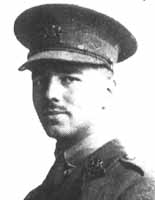
I've decided to let the enormity of 9.11 speak for itself rather than adding to all words that will be written about it today. What little I will add, can be summed by Wilfred Owen, the most famous of the WWI English trench poets. In the Preface to his book, Poems, Owen wrote,
This book is not about heroes.
English Poetry is not yet fit to speak of them.
Nor is it about deeds or lands, nor anything about glory, honour, dominion or power, except War.
Above all, this book is not concerned with Poetry.
The subject of it is War, and the pity of War.
The Poetry is in the pity.
Yet these elegies are not to this generation,
This is in no sense consolatory.

They may be to the next.
All the poet can do to-day is to warn.
That is why the true Poets must be truthful.
If I thought the letter of this book would last,
I might have used proper names; but if the spirit of it survives Prussia, --
my ambition and those names will be content; for they will have
achieved themselves fresher fields than Flanders.


Owen was killed in action on 4 November 1918 during the crossing of the Sambre-Oise Canal, exactly one week (almost to the hour - the eleventh) before the signing of the Armistice. His mother received the telegram informing her of his death on Armistice Day, as the church bells were ringing out in celebration. He is buried at Ors Communal Cemetery.

Labels: , ,

28.12.08

Off to The Philippines!

yet again


HAPPY NEW YEAR!

Labels: ,

15.9.08

Giving Europe a Soul?

Wim Wenders asks
"What is Europe?"


One of Germany's foremost filmmakers, Wenders delivered the following speech at A Soul for Europe, a conference held on 19 November 2006. Declaring that Europeans must believe in the power of their own imagery, he will return to Germany in the new year to make films on his country's post-Cold War realities.
"What is Europe?"
"How is Europe?"

One has the impression
that Europe is a wreck,
fucked,
"foutue",
if you think back to the constitution disaster,
reflect on Europe's actual political influence
or on the lack of enthusiasm shown by its citizens
for "the European Cause" in recent times.
"The Europeans" have had it up to here with Europe...

On the other hand,
Europe is heaven on earth,
the promised land,
as soon as you look at it from the outside.
Over the last couple of months,
I have seen Europe from Chicago and New York,
from Tokyo and Rio,
from Australia,
from the heart of Africa, the Congo,
and, just last week, from Moscow.
I am telling you:
In each case, Europe appeared in a different light,
but always as paradise,
as a dream of mankind,
as a stronghold of peace, prosperity and civilization.

Europe:
Now you see it,
now you don't.

Those who have lived for a long time in Europe
seem weary of it.
Those who are not there, who live somewhere else,
want to get here at any price and join us.

What is it then
that some HAVE,
yet no longer want,
and for which others YEARN so much?

I can just as well ask myself:
Why is it that I find Europe so "holy",
as soon as I see it from a distance,
and why does it appear so profane, humdrum, almost boring,
as soon as I am back?

When I was young,
I dreamed of a Europe without borders.
Now, I travel back and forth
without ever having to show my passport,
and I even get to use the same currency all over,
(even if it is pronounced differently everywhere),
but where has that big emotion gone?

Here in Berlin, I am German,
in the meantime with all my heart.
Yet, hardly do you set foot in America,
than you no longer say you are from Germany, France, Italy or wherever.
You come "from Europe," or you're about to return there.
For Americans, this epitomizes culture,
history, style, "savoir vivre."
It's the only thing they feel strangely inferior about.
Even rather permanently.

And even when viewed from Asia, let alone other parts of the world,
Europe appears to be a bastion of human history,
dignity, and, yes, this word again: culture.

Europe has a soul, indeed.
No need to invent or create one for our continent.
It's there in plain sight.
It is not to be found in its politics or in its economy.
It is first and foremost embedded in its culture.

I am kicking open doors.
Two years ago, the President of the European Commission
stood here in Berlin and stated the matter quite clearly.
I quote from the end of his speech:

"Europe is not only about markets, it is also about values and culture.
And allow me a personal remark:
in the hierarchy of values, the cultural ones range above the economic ones.
If the economy is a necessity for our lives,
culture is really what makes our life worth living."

I could quote other sections of his memorable speech,
in fact I'd like to read it in its entirety,
so much he took the words out of my mouth.

But, I'm afraid,
reality looks quite different:
to the outside world, and especially to its citizens,
Europe continues to present itself first of all as an economic power,
insisting on using political and financial arguments
over cultural ones at any give time.

Europe is not taking advantage of its emotional potential!

Who loves his (or her) country on account of its politics or its economy?
No one!

Just next door, 100 metres from here,
you'll find one of the "showrooms" of the European Community.
There's one like that in every other European capital.
And what's on display there?
Lots of maps, brochures, mostly economic information,
all sorts of statistics and stuff on the history of the European Union.
What a drag!
Who can possibly feel represented there?
Who are these places trying to reach,
or boring to death?

We live in the age of the image.
Today, no other realm of culture displays so much power
than that of the image.
Words, music, literature,
books, newspapers, rock'n roll, theatre...
nothing comes even close
to the authority of moving images, in cinema and television.

Why is it that today, not only in Europe,
but all over the world,
"going to the pictures"
is synonymous with
"seeing an American film"?!

Because the Americans realized long ago
what moves people most
and what gets them dreaming.
And they radically implemented that knowledge.
The whole "American Dream"
is really an invention of cinema,
and it is now being dreamed by the whole world.

I don't want to discredit this,
but merely ask the question,
"Who is dreaming the European Dream?"
Or better: How are we encouraged to dream it?

A concrete, current example just occurred to me:
In the next 2 months or so,
some 20, 30, or even 50 million Europeans
will watch one and the same film.
It started the other day:
every channel up and down,
every programme and news show,
- and I've been surfing TV stations throughout Europe -
reported at large on a film premiere in London.
As you have probably guessed already,
all the racket was about James Bond,
that knightly British gentleman,
who has been saving the world from disaster for the last forty years.
Do you recall that magnificent Scotsman, Sir Sean Connery,
who used to embody this European hero?
Or that most elegant, cultivated Irishman, Pierce Brosnan?

Now, over Christmas and through New Year's Eve probably,
millions of Europeans will all be watching, at the same time,
somebody who looks more like a thug,
and whose resemblance to Russian President Vladimir Putin
can scarcely be denied.
This new Bond is supposedly quite ruthless
and not too particular when it comes to applying violence.
What is the message here?
What is this American production trying to tell us?

All right, I might be exaggerating,
but the heart of the matter remains pretty much true:
our own myths don't belong to us anymore.
Nothing forms our contemporary imagination so intensely,
so specifically
and permanently
as cinema.
But we are no longer in control.
It doesn't belong to us anymore.
Our very own and precious invention has slipped away from us.

European cinema
- and it exists, in spite of everything! -
is produced in almost 50 European countries,
yet in European theatres our own European stories
no longer play a significant role.

Those images of European cinema,
could help a whole new generation of Europeans to recognize themselves,
they could define what Europe is all about
in emotional, powerful and lasting terms.
These films could convey European thinking to the world.
We could communicate our most valuable asset,
our CULTURE, in a contagious way,
could spread the word of the "Open Society,"
which was so urgently invoked here by George Soros, only yesterday,
our civilization of dialogue, peace, and humanity…
But we have let this weapon slip out of our hands.

I intentionally say WEAPON,
because images are the most powerful arms of this 21st century.

There will be no "European consciousness",
no emotions and no attachment felt towards our home continent,
in brief: no future European identity,
if we are unable to project, and to absorb,
our own myths,
our own history,
and our own ideas and emotions!

Spain, for example, has no stronger and more influential ambassador
to the world than Pedro Almodovar.
For Britain that would be Ken Loach,
Andrzej Wajda or Polanski for Poland.
Although he died some 13 years ago,
Federico Fellini continues to define the Italian soul…
And that is exactly what European cinema does -
it shapes and forms our consciousness of ourselves
and of each other!
It creates a European belief,
a European will,
that very European "soul" that we"re talking about here.

However, have a look around
at the place we actually give to our TREASURE,
what a poor role it actually plays in the cultural life of Europe.
Yes, look at how European politics
continue to dismally neglect
not only cinema, but culture in general.
Yet, this is the CEMENT,
the glue that bonds European EMOTIONS!

All these countries yearning for Europe,
including all the new and future member countries from Eastern Europe,
could on one hand have the opportunity to introduce themselves,
tell us about themselves,
win us over,
and on the other hand be welcomed and embraced
by the European CAUSE
and the European SOUL…
… if only
we would provide more support for our mutual ambassadors,
if only Europe could be brought to believe in the power of images.

Mind you, a grave error is being made here.
Europe prefers to use political and economical arguments,
over emotional ones!
Next door, in the showroom,
the most boring maps are hanging on the walls,
while in our most important embassies,
in cinemas and on TV,
the superpower of imagery, America, is pulling people under its spell,
including our European citizens, of course.

These young people
now suffering from a "European withdrawal"
will one day turn against European policy makers
with the harsh and bitter reproach:
Why did you allow
a whole generation to get bored of Europe?!
Why did you just babble on about politics,
instead of SHOWING us how much our magnificent home continent
could have meant to us!

Europe HAS a cultural history,
it HAS its own culture of life, of conflict, of dialogue,
yes, it HAS an amazing political culture.
George Soros calls it "The Open Society."
And because, as he explained, America had failed in recent times
to exemplify and demonstrate its moral and political values,
Europe represents an even more important MODEL for the world.

BUT:
This model is invalid and weak
if it has no confidence in the power of its own imagery!
No one, esteemed Mr. Soros,
will be swept away, enthused and inspired by the OPEN SOCIETY,
as long as it remains an ABSTRACT IDEA.
Such a vision has to be attached to feelings,
to places, to memories.

These "European emotions" are right in front of our eyes,
you can almost grasp them,
the citizens of Europe are certainly yearning for them…
but politics is widely ignoring them.
The field of images
is largely being left to others.

I hope that Europe is not too late in recognizing
which crucial battlefield is about to be abandoned
with little resistance.

Translation, John Bergeron

Labels: , ,

2.8.08

Reason for hope

from Mindnao!


Labels: , ,

31.7.08

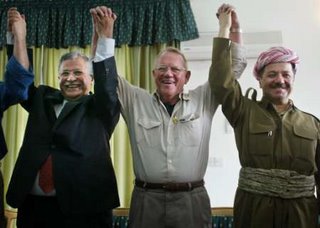
I met the walrus

working for peace
in Mindanao

Labels: , ,

29.7.08

Mindanao redux

Minda-where?
(until 7 August)


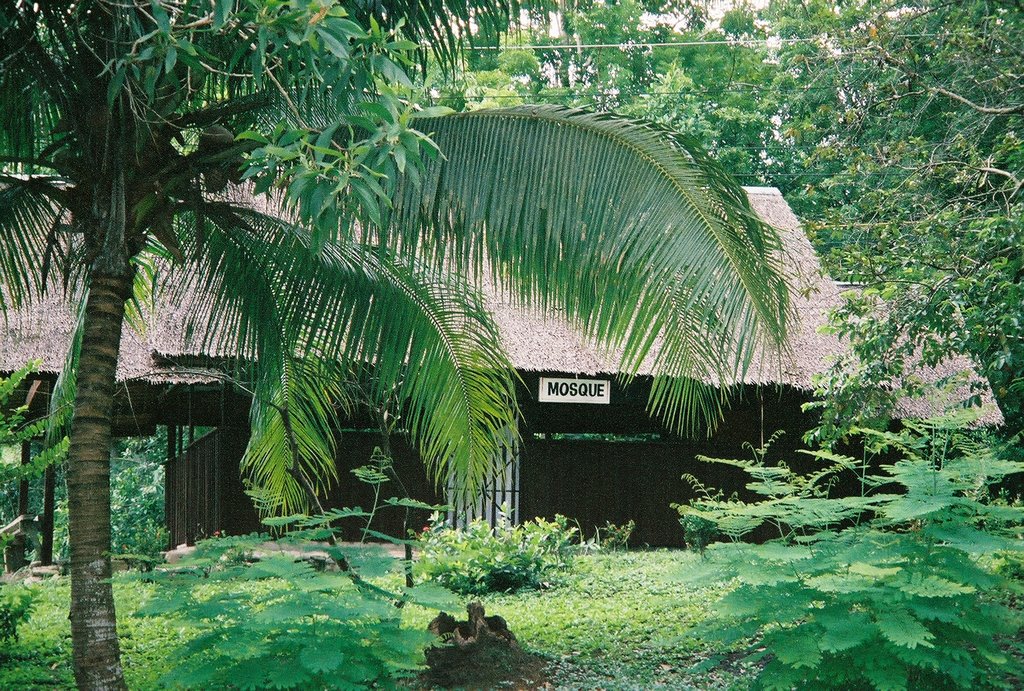
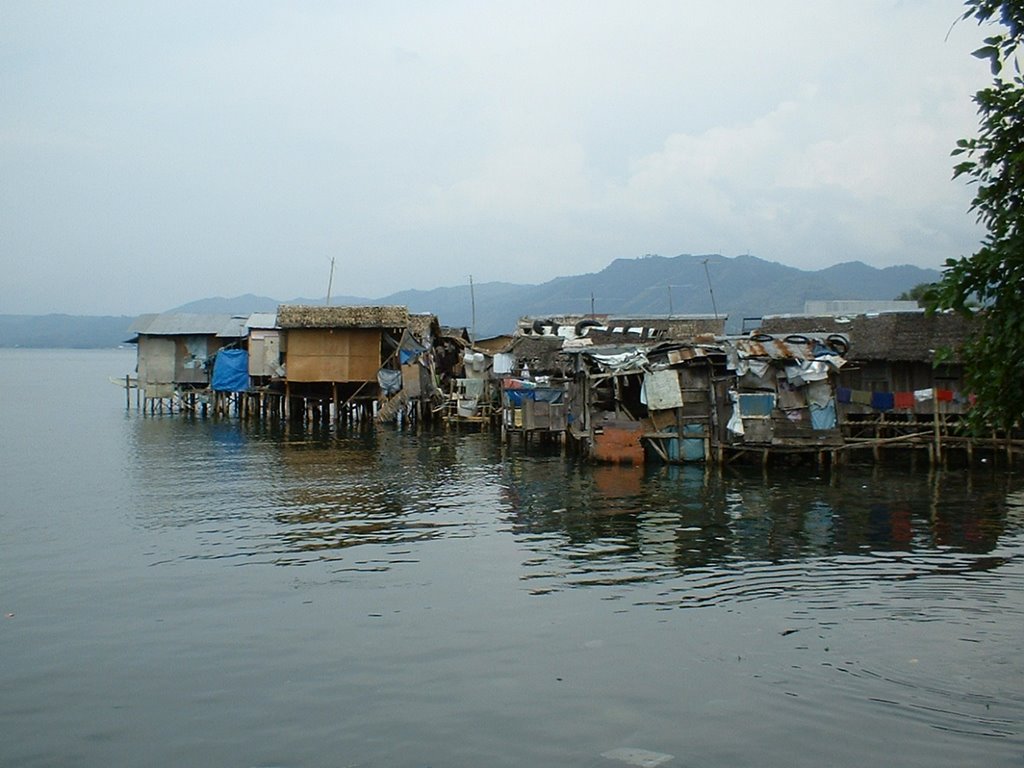
That was the least surprising response I got when I told folks that I was going to Mindanao last summer. Most surprising were the responses I got from those who know that Mindanao is the largest and southernmost of the 7000 islands that make up the Philippines. When I went to get me visa at the Philippine consulate, just opposite the Art Institute on Michigan Avenue, an older Filipino gentleman waiting in line behind me asked rather straightforwardly, "Are you afraid for your safety?" I would have easily dismissed his grave concern if the official behind the counter hadn't nodded his head in agreement, adding, "There are a lot of nice tourist sites in Manila. Why don't you go there instead?"

But I wasn't going to Manila except to spend eight hours waiting for a connecting flight to Mindanao. I wasn't going there for the tourist sites either. I was going there for the very reasons that the US State Department tells Americans going to Mindanao, "kidnappings, bombings, violence, and insurgent activity make travel hazardous in many areas." In addition to making the deadlier aspects of human conflict sound rather like a severe weather alert, this travel warning, the highest the State department can give, does little to tell Americans why there is conflict in Mindanao and what, if anything, is being done to end it.

That was why I was going.

The US Institute for Peace had given the Interfaith Youth Core, where I was the Director of Education and Training, a field research grant to study how our interfaith youth approach to conflict resolution might be adapted for use in some of the world's conflict areas. It funded my four-week trip to Mindanao in July and August this summer. This gave me an utterly astonishing view of the paradoxical relationship between Mindanao and the US. More significantly, it revealed an extraordinary group of young people there who, with little support from their national government in Manila and little visibility outside the Philippines, are working hard to fulfill the promise of peace.

Throughout the Philippines, Mindanao is known as "The Land of Promise." It is a mountainous tropical island with rich volcanic soil. Vegetarians who come to Mindanao will think they've gone to heaven. Mindanoans eat an unimaginable variety of fruits, some like the Jackfruit larger than a watermelon, others small and spiky like the Rambutan. As a result, successive Philippine governments in Manila as well as colonial occupiers have encouraged large numbers of migrants from the other islands to settle and farm the land there over the years. But despite the generous gifts of both geography and climate, the promise of the good life so enthusiastically offered in Manila has gone largely unfulfilled. For Mindanao's natural diversity is surpassed only by its ethnic and religious diversity.

When Muslim missionaries came in the 14th and 15th centuries from what is today Malaysia and Indonesia they encountered an indigenous population, today called Lumad, organized into tribes governed through extended family networks with headman or datus, at the top. Reflecting the genius of Islam's adaptability, these missionaries established two sultanates largely on this existing social structure. Coming a hundred years or so later, the Spaniards were surely surprised to be facing yet another Muslim foe. Expecting to repeat their dubious achievement of removing the Moors from Spain, they christened the local Muslim population, Moro. History, however, did not repeat itself. Successful Moro resistance forced the Spaniards to largely bypass Mindanao as they occupied the rest of the Philippines, converting the vast majority of the population to Catholicism.

Until the end of the 19th Century, Mindanao remained an isolated outpost of the declining Spanish Empire with both the Lumad and Moro increasingly marginalized by the Catholic settler majority. This abruptly changed in 1898 with the Spanish-American War. After a rapid victory, the US refused to honor its promise of Philippines independence. Mindanao along with the rest of the Philippines suddenly became the focus of US imperial ambitions in Asia. And it demonstrated the extreme difficulties in suppressing a local armed movement of national liberation. The Philippine Insurrection, lasting until 1902, left a legacy that for the most part remains forgotten in the US today. Echoing Viet Nam 60 years later, it left more than 4,200 U.S. soldiers, 20,000 Filipino soldiers, and 200,000 Filipino civilians dead.

In Mindanao, the US army, fresh from its Indian Wars in the American West, fought a scorched earth campaign still remembered locally as the Moro Wars. But American policy was a paradoxical mixed of brutality and benevolence. Army commanders such as John J. Pershing, who later in WWI would be lionized as Blackjack Pershing, built roads, hospitals and schools. Today, Mindanao's double-edged experience of this period strongly colors its special relationship with the US. During my first days in Zamboanga City in the southwest of Mindanao, I discussed this with a two local university professors as we sat sipping coffee just off Plaza Pershing. One referred to the scene from the Monty Python movie, The Life of Brian, where the People's Front of Judea compiles a list of its grievances against the Romans . except for good roads, safe streets, and the aqueducts.

Despite eventual Philippine independence in 1946, Mindanoans continue to acknowledge this special relationship with the US. Each year the many who are denied US visas nevertheless remain hopeful that one day the promise of the American Dream will be fulfilled. Those who actually make it here to study at colleges and universities or work in the health care and other professions have become part of the second largest and fastest growing Asian immigrant community in the US. Their success as new Americans results in even closer social and economic ties between the US and Mindanao.

Perhaps not surprisingly, most Americans remain ignorant of our ties with Mindanao. This would be merely unfortunate if it weren't for the fact that Mindanao is now one of the fronts in the US Global War on Terror. Indeed, since 9.11, US foreign policy has given considerable military and diplomatic support to the Philippine government in its counter-insurgency war against two local Islamist groups: the Moro Islamic Liberation Front, or MILF, and Abu Sayyaf, one of al-Qaeda's most aggressive affiliates in southeast Asia. The relationship between these two organizations is murky and controversial. Nonetheless, most Mindanoans with whom I spoke agreed that they are both outgrowths of the more secular Moro National Liberation Front, or MNLF, which first appeared in the early 1970s to fight for Mindanao independence from the Philippines. Today, it is one of the few Islamic national liberation movements to have successfully laid down its arms to peacefully govern the Autonomous Region of Muslim Mindanao, or ARMM, with grudging support from the Philippine government.

What is not murky is the US military and diplomatic presence in the south and west of the island where the Philippine army is fighting both the MILF and Abu Sayyaf. And like US counter-insurgency polices a hundred years before, US support is again perceived locally as a paradox. US Special Forces units have operated in MILF territory since the summer of 2002. While training the Philippine army has been their official mission, there seems to be little doubt locally that they are conducting the military operations themselves. In Marawi City, known as the only Muslim City in Mindanao, I met with one of the founders of the MNLF, the unofficial minister for propaganda for the ARMM. He not only reiterated this position, but also forcefully added that the CIA was responsible for both creating and arming the MILF and Abu Sayyaf to defeat the MNLF.

These and other conspiracy theories abound throughout the island despite the generally successful efforts of US public diplomacy. In addition to the roads and clinics built by US Special Forces and USAID, the State Department has reached out to local and regional peace groups working to sustain Zones of Peace where the Philippine army and the MILF have negotiated cease-fire agreements. For the last three years, it has funded a project at Northern Illinois University in DeKalb that bring groups of Christian, Muslim, and Lumad university students and their adult advisors to the Midwest every April to develop their skills in interfaith dialogue, conflict resolution, and community service. Upon returning they implement action plans to create and sustain the promise of peace in their own communities.

The opportunity to observe these young people in action in their own communities after working with them here in Chicago dispelled any notions I had concerning the intractability of Mindanao's conflict. These young people are impressive for they combine an infectious enthusiasm with a hard-won realism. They come from communities caught directly in the crossfire. Many have been evacuated for their neighborhoods and villages or worse, have lost family members. Clearly, they are the best and brightest of Mindanao's emerging generation of leaders. And for me, their work is one important way with which Mindanao can truly become the Land of Promise.

Labels: , ,

23.7.08

Radovan Karadžić

in
New Age Hell?

The former President of the self-styled Republika Srbska was arrested on the streets of Belgrade 13 years, almost to the day, after the Srebrenica Massacre. Calling himself Doctor David, Karadžić peddled meditation and alternative healing, and made the rounds on the lecture circuit, and sold amulets on his website.

While the site is still up, you should check it out. The site includes some rather ironic Chinese proverbs, given his previous career:
You cannot prevent the birds of sorrow from flying over your head, but you can prevent them from building nests in your hair.

He who cannot agree with his enemies is controlled by them.

If your strength is small, don't carry heavy burdens. If your words are worthless, don't give advice.

The one who gives up his own, should dig two graves.
Karadžić will face charges of genocide, crimes against humanity, and other atrocities. During his presidency, he oversaw a campaign to repress Bosnian Muslims and other non-Serbs as Bosnia-Herzegovina declared independence from Yugoslavia in 1991. This includes organizing the 11 July 1995 massacre of more than 7,000 Muslim men and boys in Srebrenica, the largest atrocity in post-World War II Europe. Karadžić and his wartime army commander, General Ratko Mladić, are the last major Balkan war crimes suspects.

Labels: , ,

4.6.08

Dona Nobis Pacem

my first tag
and for
a good cause!


Mimi, the QUEEN of meme's, the creator of The Peace Globes, the author of BlogBlast for Peace has come up with a brilliant idea. She is treating her Peace Globes as a meme to spread this wonderful event. She tagged me last week so I'm going to jump on board. I challenge you to copy and paste this meme on your site and tag absolutely everyone in the blogosphere.

Here's what she wants you to do:
How To Get Your Peace Globe In 4 easy steps!
  1. Choose one of the four Peace Globe designs in this post. Right CLICK and SAVE in JPG format.

  2. Sign the globe using Paint, Photoshop or a similar graphics tool. Decorate the globe anyway you wish. You can even include the name of your blog. Click here for hundreds of inspiring examples from previous BlogBlasts.

  3. Return the peace globe to me via email - mimiwrites2005 at yahoo.com - Let me know your blog's name and url by leaving a comment here and signing the Mr. Linky. Your submission will be numbered and dated in the official gallery . Your globe and post will be listed on the Official BlogBlast For Peace website and The Peace Globe Posts page.

  4. Here's the most important part -- On June 4, 2008 DISPLAY YOUR GLOBE IN A POST. Title your post "Dona Nobis Pacem". This is important. The goal is for all blog post titles to say the same thing on the same day. Write about peace that day or simply fly your globe.
And here's my humble contribution!

Labels: , ,

21.11.07

Wheels of a clown...

when the
whole world's
around


Late in 2004, Alvaro Neil decided to leave his job in Spain and spend his time giving smiles around the world ... by bike. He calls his project MOSAW, or Miles Of Smiles Around The World. What he does is perform as a clown wherever he ends up.

He first crossed 10 countries in South America, then returned to Spain and published his book Kilometres of Smiles. After that, he crossed the Straits of Gibraltar to Africa. After 415 days of travel, passing through 19 countries along some 19,000 km of bike unfriendly roads, he made it to South Africa in January 06. Along the way he performed for 100s and 100s of kids; in Tanzania, for example, he put on his act for over 3,000 refugees.

Neil is now in Cairo. He'll perform at the Alwan Wa Awtar Organisation in Muqattam as well as the St. Joseph College. He'll also give workshops for local clown wannabes. You can read his bicycle diaries at his website, Biciclown.
Labels: , ,

2.5.07

Mission accomplished?

I told you so...


Four years ago yesterday, Bush declares Mission Accomplished. One month earlier, on 4 April, Paul Rogers writes in OpenDemocracy:
The arrival of the American army at the gates of Baghdad heralds a decisive phase of the Iraq war. However it ends, the US’s current global ambitions guarantee bitter and prolonged conflict in the Middle East and beyond. The Iraq war is only two weeks old yet the Iraqi civilian death toll is already in the high hundreds, and Iraqi military losses (while harder to estimate) in the several thousands.

The duration of this immediate conflict is yet uncertain, but some of its aspects already suggest that it may inaugurate a much longer conflict lasting for decades.
The war itself was initiated by the United States and Britain without UN endorsement and in the face of opposition stretching far beyond the Middle East to encompass public opinion across most of the world. In these circumstances, a very short war was needed, involving the almost complete collapse of the Saddam Hussein regime.

Instead, the regime survived the initial attacks, resistance in most of the towns and cities has been much greater than the US military commanders expected, and there have been few instances of crowds welcoming the liberators.
Many US strategists had anticipated an immediate collapse of the regime. This did not happen yet they still confidently expected US forces to be on the outskirts of Baghdad and ready for occupation of the city within four or five days.

In the event, some US forces are now close to Baghdad, but the extent of the Iraqi resistance so far means that they will either have to establish large forces close to the city, or else almost immediately fight their way through the city using their overwhelming firepower.
Already, there are signs of a much more aggressive use of area impact munitions and other forms of firepower, with civilian casualties rising rapidly. This situation is born of two requirements – the need to gain the initiative because of political pressures, and the inevitable response to the risk of suicide bombings.

A trail of bitterness

The effect across the region, though, is fundamental in its impact. Across the Arab world as a whole, the picture is of an aggressive superpower, aided and abetted by Britain, invading and occupying one of the major Arab states. Furthermore, Iraq may be a 20th century construct, but it represents Islamic and predecessor civilizations dating back many thousands of years.
There remains little affection for Saddam Hussein anywhere in the region, although the Americans are currently achieving the extraordinary feat of making him considerably more popular than he was. Much more significant is the gathering support for Iraq and the Iraqis, based on the firm belief that they are being subjected to a western conquest that will become a long-term subjugation. Already this is attracting radicals to Iraq; it is also a ‘gift’ to al-Qaida and its associates.

President Mubarak of Egypt, one of the strongest allies of the United States in the region, talked in Suez of the risk of this war giving birth to ‘a hundred bin Ladens’.
Unless the regime suddenly collapses, events of the next four weeks will only reinforce the almost visceral opposition to what the Americans and British are now doing. Following its earlier reversals, the US forces can decide to attack the core leadership of the regime almost at once, using their available troops combined with massive use of weaponry. This could well achieve the objective of regime termination, but the human costs would be enormous; thousands of civilians would die and tens of thousands would be injured.

Instead, they could wait for two to three weeks for reinforcements and then move in, again employing massive firepower which would kill many civilians. In either case, the war could still end within six weeks. A higher level of Iraqi resistance might involve a longer siege of Baghdad and continue through the summer heat. How this war ends, though, is largely irrelevant in the long term. The important point is that it will leave a trail of bitterness and despair that will last for years and even decades. In part, this will be a legacy of the sheer impact of the bloodshed and destruction, and a near-universal perception across the region that the United States and its Israeli ally are in the business of controlling the Arab world. The perception here is at least as important as the reality, and in any case there are far too many aspects of the war and its probable aftermath which allow this perception to gain some credibility.

A failure of US intelligence

Whatever Tony Blair may hope for, it is becoming clear that Washington’s initial post-war plan is for the United States to have firm control over the country. The twenty-three ministries will all be headed by Americans, with appointed Iraqi advisers, and the overall head of the state apparatus will be a US General, Jay Garner, who has close links with Israel as well as being president of an arms contracting company that makes missile guidance systems.

There is abundant evidence that Washington’s security neo-conservatives believe it to be absolutely essential for the United States to have effective control of the Gulf. With its massive oil reserves now accounting for nearly 70% of world totals, and most industrial economies increasingly dependent on Gulf oil, controlling the region has become an essential feature of the Republican security paradigm.
This means terminating the Iraqi regime followed by the occupation of the country and the establishment of an acceptable client state secured by a permanent US military presence. It further means deterring Iran from presenting any threats to US security, a process that will be made much easier by control of Iraq. There seems to be no understanding whatsoever of the effect of this on the region; nor does the US seem to realise that it plays directly into the hands of militant radicals.

Instead, there is a naive belief that such a western-dominated order can be sustained, perhaps stemming from apparent past successes in working with local elites.
The US mistake lies in failing to recognise three key trends. The first is the demographic process that has resulted in many tens of millions of young people who are increasingly marginalised from economic participation.

This is compounded by the second trend, the effect of secondary and tertiary education on millions of people across the region, giving them a much clearer understanding of what is happening. Such people all too frequently see their ruling elites as benefiting at their expense as well as being inextricably linked with the US and other western states.

The third trend is the existence of new channels of communication like al-Jazeera that present the realities in the Middle East in a way that has not hitherto existed.
The end result is a bitterness that will express itself in many different ways in the coming years, not least in the development of further radical and extreme social movements such as al-Qaida. Even in Iraq itself, there may be sustained resistance to US dominance, but this will be marginal compared with the reaction across the region.

A vital choice

Gulf oil will be the dominant energy source for the world for upwards of thirty years. If the US neo-conservatives establish a paradigm of clear-cut western control of the region, with Iraq at its centre, then the stage is set for a conflict that lasts just as long.
The Iraq war may be over within three months or it may take longer; in either case, it has the potential to signal the development of a much more sustained conflict. Whether this occurs depends in turn on a key variable: the endurance and success of the Bush administration’s conception of international security, the essential requirement for a New American Century. If this conception does succeed, a thirty-year war is in prospect. If, by contrast, a saner approach to international security develops, the beginnings of a peaceful order could be shaped. What happens in Iraq in the next few months may determine which route is taken.
Paul Rogers is Professor of Peace Studies at Bradford University and is openDemocracy’s International Security Editor. A consultant to the Oxford Research Group, the second edition of his book Losing Control has just been published by Pluto Press.

Labels: , , , ,

30.1.07

Ride4Peace

...across the
India - Pakistan border


Siddharth "Sid" Rajan started a unique trip last Saturday to promote peace between India and Pakistan. The 22 year-old engineering student is pedaling his unicycle from New Delhi to Lahore. Two friends of Sid and his sister are accompanying him on their bikes.

His parents are also part of his support team up to the Wagah border. Sid, who captained the Singapore unicycle national team, has set several long-distance uni-cycling records. Last year, for example, he rolled through Laos.

After the Ride4Peace, Sid will start preparing for roll from the North Pole to the South Pole. He will join the 23 other young people recruited by The Pole-to-Pole Leadership Institute. It's organizing the expedition to promote human powered transportation alternatives. Along the way the expedition members will participate in various humanitarian and environmental projects.

The expedition, which begins on 24 April, will depend on bikes, skis, feet to cover the 35,000 km. Each member will demonstrate the skills and endurance necessary for surviving 18 months worth of ice, sand, rain, as well as extremes in cold and heat. Sid will join the institute's Canadian training camp immediately after he arrives in Lahore.

Labels: , , ,

14.1.07

Iranians roll

...for peace

The Islamic Republic News Agency reports that a puppet theater group plans a biking tour to bring a message of peace and friendship to Europeans.
TEHRAN, January 13 - An Iranian theatrical group is planning to embark on a bicycle tour across Europe to stage a puppet show, named `Rainbow' and convey the Iranian people's message of peace and friendship to the world, IRNA reported.

The group called `Charpayeh' is scheduled to start the tour this spring and pass through 25 European countries. It will perform a mute musical puppet show outdoors.

`Rainbow' shows the early stages of the life of four human races willing to live in peaceful coexistence while demonic forces attempt to sow seed of discord among them, which results in armed conflicts. Eventually they listen to their inner voice, reconcile with each other and bury their guns. The playwright and director of the show, Ali Pour-Tabib said that in `Rainbow', the peace message of the Iranians will be conveyed to the people in a fully symbolic manner.

He believed that a free theater group can convey such a message in the most optimum way. "The plan for such a show was recently approved by the theatrical scripts council of the Theater Center of the Institute for Intellectual Development of Children and Young Adults (IIDCYA).

"The group, which mainly aims to promote and display religious and peaceful culture of Iranians, will pedal through Europe in a symbolic way. Meanwhile, it will be accompanied with a wagon car," he added.

The playwright said that each of the bicycles represent the color of the human races residing on the globe. The tour expected to last between 90 to 100 days will start from Iran.

The theater group is scheduled to pedal through Turkey, Greece, Albania, Macedonia, Bulgaria, Romania, Yugoslavia, Bosnia, Croatia, Slovenia, Hungary, Slovakia, Czech, Austria, Liechtenstein, Switzerland, Italy, France, Andorra, Spain, France, Luxembourg, Belgium, the Netherlands, Germany, Poland, Lithuania, Latvia, Belarus, Ukraine, Russia, Georgia and Azerbaijan. From Azerbaijan, the performance group will pedal back to Iran through Armenia.

One of the interesting moves in this puppet show is the burial of the coffin containing guns on an open stage, while being accompanied by the audience. At the end of the tour, the coffin will be showcased in war museums of various countries.

Labels: , , , ,

6.12.06

What goes around comes around

The situation in Iraq
is grave and deteriorating...


The United States Institute for Peace has posted The Iraq Study Group's report as a pdf file and as a web-based document. Not surprisngly, blogosphere is heating up.

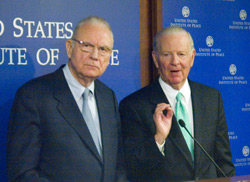
And here is an alternative plan by Lt. Gen. Jay Garner. When it comes to Iraq, he has been there, done that for 15 years, so he might be worth listening to. For his part, President Bush has offered to take the ISG recommendations very seriously.

Here are are some excerpts.
Introduction
If the situation continues to deteriorate, the consequences could be severe. A slide toward chaos could trigger the collapse of Iraq's government and a humanitarian catastrophe...

Our recommended course has shortcomings, but we firmly believe that it includes the best strategies and tactics to positively influence the outcome in Iraq and the region.

External Approach
The United States should immediately launch a new diplomatic offensive to build an international consensus for stability in Iraq and the region... Iraq's neighbours and key states in and outside the region should form a support group to reinforce security and national reconciliation within Iraq...

The United States cannot achieve its goals in the Middle East unless it deals with the Arab-Israeli conflict and regional instability.

There must be a renewed and sustained commitment by the United States to a comprehensive Arab-Israeli peace on all fronts... This commitment must include direct talks with, by, and between Israel, Lebanon and Palestinians (those who accept Israel's right to exist), and Syria...

The United States should provide additional political, economic, and military support for Afghanistan, including resources that might become available as combat forces are moved out of Iraq.

Internal Approach
The primary mission of US forces in Iraq should evolve to one of supporting the Iraqi army...

By the first quarter of 2008, subject to unexpected developments in the security situation on the ground, all combat brigades not necessary for force protection could be out of Iraq...

The United States must not make an open-ended commitment to keep large numbers of American troops deployed in Iraq.

Letter from Co-chairs
All options have not been exhausted. We believe it is still possible to pursue different policies that can give Iraq an opportunity for a better future...

Our report makes it clear that the Iraqi government and the Iraqi people also must act to achieve a stable and hopeful future.

What we recommend in this report demands a tremendous amount of political will and co-operation by the executive and legislative branches of the US government...

Success depends on the unity of the American people in a time of political polarisation...

US foreign policy is doomed to failure - as is any course of action in Iraq - if it is not supported by a broad, sustained consensus. The aim of our report is to move our country toward such a consensus.

Labels: , ,

24.11.06

On Isaiah Berlin, Part III

Continuing with Clive James
Which brings us to the European empire of Nazi Germany , where so many of the bubbles represented Berlin 's fellow Jews. There could have been several reasons why Berlin said so little. He called it “the most fearful genocide in history”, but beyond that he offered no illumination, as if the subject were too dark to admit light. The first reason might have been that he didn't know what to say. Thomas Mann — not a Jew but married to a half-Jew, and prominent on Heydrich's personal list of illustrious absentees with Jewish sympathies who should be dealt with promptly if they ever returned to Germany —started broadcasting from America as early as 1942 about what he knew the Nazis were up to in the East. (He didn't need access to the Ultra decrypts to get the facts: they were in the Swiss newspapers.) But after the war, when the full statistics of the Holocaust came out, his reaction was to work on The Confessions of Felix Krull. Berlin, too, probably knew all about it from an early date, but perhaps he found himself equally short of adequate things to say when the full magnitude of the horror was revealed. One of the revelations was that both of his grandfathers had been murdered immediately when the Nazis occupied Riga in 1941. He barely mentioned it, and the best explanation is that he was traumatised, and that the trauma was intensified to a paralysis by the realisation — imagination overload — that the extinguished multitudes were his grandfathers multiplied by millions.

Another reason could have been that other people did the job, notably Raul Hilberger and Martin Gilbert, and that anything he had to add would have been rhetoric. (He said this to Ignatieff, who might have been slower to report that Berlin “actively despised the Holocaust industry”. The Holocaust industry has never produced as much toxic waste as the Holocaust Denial industry, and if there are too many books, too few of them have reached even Vienna, let alone Cairo and Riadh,) Yet another reason might have been guilt for one of the two roles he had played in war-time Washington with relation to Zionism. A Zionist himself, he was a personal friend of Weizmann. Berlin used his connections to smooth Weizmann's path to Roosevelt and a possible endorsement for the Zionist cause. But as an emissary of Britain 's Ministry of Information, Berlin was also obliged — unless he resigned—to promote his government's official line on Palestine, based on the infamous White Paper that denied refugee Jews entry to what was, for many of them, the only possible sanctuary from Hitler. It couldn't have been long before Berlin realised that this made him party to a crime. Ever the diplomat, Berlin sided with Weizmann in the conviction that a Jewish entity of some kind would eventually emerge after the British had been talked into modifying their mandate — sided, that is, against David Ben Gurion, who thought that the Jewish state would have to be established unilaterally, if necessary with resort to force. Berlin always thought that reason might prevail in the matter. (In a letter written home in 1943, we find him opining that the cause would be best promoted “by means of private conversations on the part of sensible persons.”) Ben Gurion knew better: or, if you like, worse.

Born to a concerted Arab attack, the state of Israel grew up in the middle of a war, which has not yet ended. For the rest of his life, Berlin remained committed to Israel, although he was always careful not to offer advice from outside, in case it was thought patronising. Ignatieff records that Berlin felt guilty about not having said anything publicly in favour of Peace Now. It was a pity he didn't, because the emphasis that Peace Now places on giving up the Occupied Territories is a potent argument for the only possible means by which Israel can preserve itself as a democracy. Berlin's agreement would have been useful to the young soldiers: long on bravery, they were short of clout. But generally, throughout Israel's short and threatened history, Berlin seems to have had the right opinions, even when he didn't voice them in public, and the Israelis valued him as a star of the diaspora, the Jewish equivalent of a Righteous Gentile. In 1979 he was awarded the Jerusalem Prize as a mark of respect. To actually live in Jerusalem, however, was never part of his plans. At one time or another Ben Gurion, Abba Eban and Teddy Kolleck all asked him to move there. He preferred Oxford . He already had his sanctuary. But of course he had always had his sanctuary. He was a Jew who had never needed to make it to the new home. His guilt must have been tremendous for the many who had needed to, and didn't. To where they went, there was no boat: only a train.

The train takes us to the best reason. Apart from his epic visions of domination and destruction, Hitler had few ideas on his mind. As a consequence, Nazi Germany gave the historian of ideas little to talk about. In The Proper Study of Mankind, the two essays grouped under the heading “Romanticism and Nationalism in the Modern Age” stop well short of Hitler's rise to power, as well they might, because Hitler was truly interested only in the power. The German right-wing intellectuals had already discovered this to their embarrassment while he was still a long way from the Reichstag. In 1922 a bunch of them called the June Club invited him to address one of their meetings. Their idea was that they would treat him to their combined scholarly wisdom before he spoke. He made it clear that he wasn't interested in what they had to say, and used the time gained to speak longer, boring some of them into the floor but convincing others that they had been wasting their lives: brutality, that was the thing. (He had the same effect on Goebbels, a proud bookworm before he met his action hero.) Even the anti-Semites found him incurious about the subtleties of their philosophy, as indeed he was, because for him anti-Semitism was a passion, not an argument. Though various ideological dingbats were allowed to pursue their researches on the government payroll, the Nazi regime reflected Hitler's hatred of ideas in all of its departments. Hitler admired Mussolini personally and copied his methods along with Stalin's. But Hitler and most of the other top Nazis thought that Fascism as a philosophy was a waste of time: too many intellectuals.

Hitler rigorously divided action from thought. Thought had to be under the control of action, not vice versa. The action came from his propensities, which were psychotic from the start. Almost all of his early successes depended on initiatives so bizarre that nobody sane could anticipate them. After the Battle of Britain had been lost, his second big failure, in Russia, came about mainly because he preferred to maltreat people who had suffered under Stalin rather than enlist their aid. Making territory he had already conquered ungovernable was no sane way to conquer more of it. Even Himmler could work that out, but Hitler didn't listen. He couldn't, because it involved conciliation, which was a true idea, as opposed to mass murder, which was an expression of emotion. Though it is tempting to believe that Hitler, after absorbing a few nutty anti-Semitic pamphlets in Vienna, read nothing except Karl May's western sagas about Old Shatterhand, the truth is somewhat different. He fancied himself as a philosopher and could drop the names that backed up the claim. In that unintentionally comic masterpiece Monologe in Fuhrerhauptquartier 1941-1944, we can find him, on May 19 th 1944, telling his nodding audience that throughout the Great War he had carried the full five volumes of Schopenhauer everywhere he went. Since he got the Iron Cross as a runner in the trenches, he must have been running with a handicap. But there is no reason to doubt he carried them, or even that he read them. Nor, however, is there any reason to believe that he critically weighed a single word. Like Stalin, he sought in texts nothing but pretexts for his actions. To bring ideas under scrutiny was not his purpose.

Since it was Berlin 's, we have a right to ask how well he did it. The first answer has to be that he did it very well. Though a worthy assemblage of his more heavyweight efforts, The Proper Study of Mankind is a bit misleading about how delightful he could be; and as so often happens with writers on serious topics, it is when he is at his most entertaining that he is most informative. He didn't really write all that brilliantly. Most of his prose pieces were transcripts of his talk boiled down from draft to draft, which is not the same process as the ab initio concentration necessary to yield a cogently nuanced text that reads like speech. He himself called his talk “an avalanche”, and he seems to have had little gift for the aphorism. That might have been one of the secrets for his continuing success at glamorous dinner tables. With his salon-wise wife Aline to manage his diary, he went on dining out until he had to be carried. Dr Johnson, in his own old age, told Boswell that he wasn't much invited anymore, because his unanswerable sallies silenced the table. Berlin was careful not to make the company feel stupid. On the night I saw him in action, he engaged in a tremendous competition with the political journalist Frank Johnson to name and evoke, with sound effects, every second-rate opera in the world. They were at each other like Joe Louis and Jersey Joe Walcott, to hilarious effect: titled ladies were spitting pheasant. At his best, he could get the same sparkling treasure into his writings. To take just one compilation, Against the Current: there is wealth of incidental truth in it. “Benjamin Disraeli, Karl Marx and the Search for Identity” is the ideal introduction to both men and makes you wonder how they would have got on. (Not very well, probably: we learn that Marx called Lassalle “the Jewish nigger”.) “The 'Naivete' of Verdi” is a classic restatement of Schiller's principle of the difference between the naïve and the sentimental: saturated with Berlin 's infectious love of music, it should be on the first-year course of every student in the country. Best of all, there is the essay about Montesquieu, which comes in handy when we try to give the second answer.

The second answer had to be that he missed a lot out, and some of it has proved to be of lasting importance. Here we should remember Burckhardt's principle. Berlin was already getting old before it started to emerge that totalitarianism had been so poisonous that the collapse or reform of the governments that imposed it would be no guarantee of its disappearance. If the first thing we now see about Nazi Germany, the Soviet Union, Maoist China and the other totalitarian states is their irrationality, it could be because of the growing evidence that totalitarianism can live without a state, and even without having a new state in mind. In that respect, even Saddam Hussein was obsolete, because he was a student of Stalin. Osama Bin Laden doesn't need to be as student of anybody except Andreas Baader, Ulrike Meinhof, the Brigati Rossi, Carlos, and whichever Japanese terrorists attacked the El Al desk at foreign airports because they had no Jews of their own. Irrationality, we can now see, is a force in itself, and scarcely in need of a brain. Already there is not just an equivalence, but a blend, between the Islamism that condemns the Western liberal democracies and the international pseudo-left intelligentsia that condemns them as well. The anti-Semitic arguments of those Muslim groups —- whether terrorist organizations or, less openly, states — who think Israel can be made to disappear are only just crazier than the pseudo-left arguments proclaiming America's responsibility for every injustice in the world. In fact the Arab arguments might even be more sane: the Palestinians can scarcely have a parallel state while suicide attacks against Israel continue, but sacrificing the Palestinians has always suited the Arab nations, and meanwhile Israel, under that degree of pressure, can be relied upon to go on gravitating towards an extremism of its own; although what the Arabs expect the Israelis to do with their atomic bombs should the point arrive when Israel caves in is difficult to judge.

We can be certain, however, that the performance of the Western intelligentsia has never been worse. Before the collapse of the Warsaw Pact regimes, the intelligentsia was merely deluded. After the collapse of the World Trade Centre, it has gone haywire. Essentially a branch of the home entertainment industry, the left intelligentsia circulates, almost entirely for its own consumption, opinions even more contemptuous of ordinary people than used to prevail on the right. At least Kissinger, when he gave the green light for the murder of Allende and the hideous events that predictably followed, could be reasonably sure that Chile 's standard of living would go up. When fashionable intellectuals pour scorn on Iraq 's provisional government as American stooges, they effectively ally themselves with the fanatics who would like to kill its every minister, with special treatment for the women. As Abba Eban once suggested, a consensus is an opinion shared by people who wouldn't dare to hold it individually. Loathe their own societies as they might — and there is plenty to loathe, even for those of us who realise that a free nation is bound to be full of things we don't like—even the most uninformed Western intellectuals are smart enough to see individually that President Bush didn't order the attack on the Twin Towers: if he had, the Golden Gate bridge would have fallen down instead. But collectively they are ready to agree that it doesn't matter what lies are told as long as a greater political truth is being served. They are unfazed when it is pointed out that the same assumption was a point of agreement between Hitler and Stalin. The totalitarian attitude to the truth, with history being rewritten not just retroactively but as it happens, has become standard. This could be an instance of decay through inheritance. Studying the institutionalised opportunism of states ruled by unalleviated mendacity, a previous generation of students caught the bug. In their separate death throes — spasmodically sudden in the case of the Third Reich, gruesomely prolonged in the case of the USSR — the totalitarian powers were dying patients who infected the doctors: a clear case of the original virus being sucked up into the syringe. The antibiotics have become toxic, like Harry Lime's penicillin. Measuring their virulence, we get a good idea of how lethal the disease was that they were originally employed to cure.

Labels: , , , , , ,

31.10.06

PTSD

When war is civil...


It's been a rough couple of weeks not the least of which because I recently found this vid on YouTube. It's from the local TV station in Tuzla, Bosnia-Herzegovina. Fourteen years ago the war began there as the Yugoslav National Army was trying to get out of the city. Having witnessed it, the vid has sparked a shit-load of bad memories.

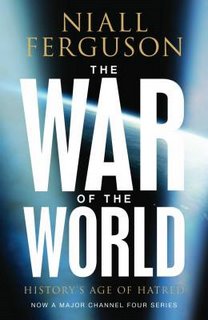
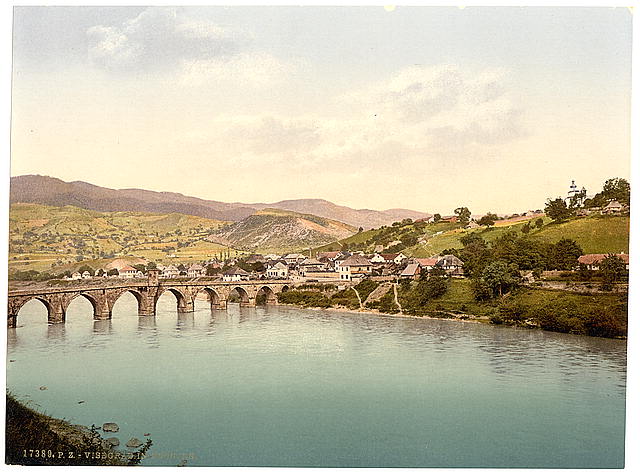
And I've been reading Niall Ferguson's new history of the 20th Century, The War of the World. In it he explains the phenomenal violence of the last century in terms of ethnic hatred and conflict. The chapter on the First World War highlights a quote from the novel, The Bridge Over the Drina. The bridge itself (pictured to the left) still stands today despite World Wars I & II as well as the Bosnian War.

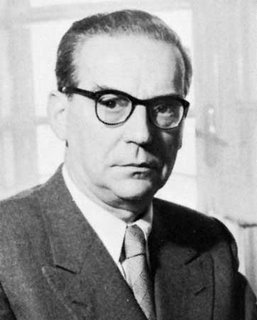
I first read this book, by Ivo Andric, as I was getting ready to go to Bosnia-Herzegovina in 1993. Winning The Nobel Prize for Literature in 1961, he describes how different ethnic groups, who otherwise had lived in peace for centuries, could viciously attack one another.

The following quote from The Bridge Over the Drina is what Ferguson included in The War of the World. Isn't it amazing that we refer to wars within communities as civil when civility is exactly what is brutally destroyed in such conflicts.
The people were divided into the persecuted and those who persecuted them. That wild beast, which lives in man and does not dare to show itself until the barriers of law and custom have been removed, was now set free. The signal was given, the barriers were down ... A man who saw clearly and with open eyes and was then living could see how this miracle took place and how the whole society could, in a single day, be transformed ... Men ... vanished overnight as if they had died suddenly, together with the habits, customs and institutions which they represented.

Labels: , , , ,

19.10.06

Finally, you are what you think

the last of 3 essays
on books, bikes, and thinking


Thinking is what I do for a living. In fact it's a large part of my very being. This doesn't mean that all I do is think. Rather, I try to be mindful of what I do and say particularly in terms of their impact on the world around me. This goes for writing as well as rolling.

My mindfulness, however, isn't inspired by the wonderful example of the Buddha. It's inspired by a stoic philosopher, Marcus Aurelius (121 - 180 AD). He was the last of the Five Good Emperors who kept Rome at peace depsite internal challenges from the early Christians and external attacks by German barabarians.

For Aurelius, Stoicism is all about realizing that the only things you can control in life are what you think, what you say, and what you do. Conversely, you can never control what others think, say, or do. If you know the difference between the two your life will be a hell of a lot less frustrating. To give a clearer picture of how this applies to the life of a roller I've come up with 6 basic principles.

1. Control only what you can control.
Fed up with paying for gas, parking, and insurance? Simply stop driving. Or drive less and ride a bike. Sick of paying 60 bucks a pop each time somebody else tunes up your bike? Learn how to do it yourself.
2. Ignore the rest.
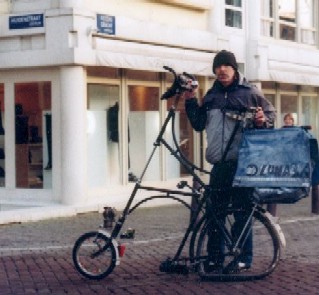
But don't try to prove something to everyone else by riding a 10 foot freakbike when you know you'll probably fall off. Why not try a fixie instead?
3. Know the difference between the two.
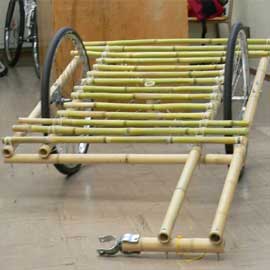
Be courageous. Try new things. Build yourself a bamboo bike trailer. Try rolling in winter. But accept your limitations. If you fail, don't beat yourself up; hey, you're human! Failure is a big part of the lifelong learning experience.
4. Do it everyday and with everything.
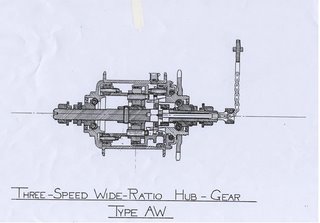
I've been carfree since 2002. I'm definitely healthier. I'm happier too. Knowing how to fix a flat or open up a Sturmey-Archer 3speed Hub has given me the confidence to try other things like learning how to navigate html and Adobe Illustrator CS2.
5. Accept that everyone else is responsible for doing the same thing.
Cagers cut you off. Massholes drink and tumble in front of you during Critical Mass. You've made your choices; they've made theirs. The best you can do is try to get out of their way. Only they, not you, can change their behavior. But they might just change because of your example, not your dirty looks or trash talk.
6. When you wake up every morning, the fact that you're not dead ... yet.
I've been doored three times, twice by taxis. I'm sure there'll be more accidents. Cagers aren't going away anytime soon. There's nothing I can do to change that. Instead I concentrate on what I can control. I never roll so fast that I'll get seriously injured. And I always try to remember that if I were to die tomorrow I'd have no regrets whatsoever. Whether on the streets of Chicago or China or a lot of other countries, life has been good to me.
I don't doubt that some will think all this sounds rather fatalistic. It really isn't. Life is tough; it can be nasty, brutish, and short. What each of us has, however, is the power to choose how we deal with it. That's what makes us human beings. That's what makes everyday life incredibly noble and heroic; something that Blaise Pascal pointed out many, many years ago.
347. Man is but a reed, the most feeble thing in nature; but he is a thinking reed. The entire universe need not arm itself to crush him. A vapour, a drop of water suffices to kill him. But, if the universe were to crush him, man would still be more noble than that which killed him, because he knows that he dies and the advantage which the universe has over him; the universe knows nothing of this.

Labels: , , , , ,