Bicycle Diaries

Recent Posts

26.10.09

Oprah's not famous in Europe

so the Olympics
won't be in Chicago


As you know, lots have been going on with me over the past few months. I haven't had time to comment of recent events ... like the Windy City's lost bid for the 2016 Olympics. So here's a funny mash-up of Downfall that brings us into the Mayor Bunker to reveal just how disappointing all this has been for The City that Works. Especially hilarious is the line 53 seconds in:
Everyone who has already been indicted for something, leave now.

Labels: , ,

15.6.08

Our bike mayor rallies...

for bikes to roll
the bus lanes


Bike2Work Week, here in The Windy City, ended Friday with a 12-hour gala in Daley Plaza. Ridership was up 35% from last year. So to celebrate, and not to be outdone by the the Cheese-eating Surrender Monkeys, Our Biking Mayor announced new initiatives to calm traffic here. According to Saturday's The Sun-Times:
You have the car. You have bike lanes. Then, you have bus lanes. As we improve the quality and movement of buses, the safest place [for cyclists] could be in the lane for buses . . . That's what we're really looking at because, many times, bus lanes are not filled . . . These are the wider streets. When you have wider streets, you’ll be able to move ’em.

Labels: , ,

10.4.08

When it rains...

it pours

It's been a crappy, cold, rainy, rainy April so far. And I haven't had much opportunity for rolling. It's not because I'm afraid of getting wet. Rather, the last few weeks have been taken up with international visitors; the latest of whom is my Belgian friend, Timothé. That's him in between me and Beaterbike Dave.

This is Timothé's first visit to the States. He annd I met when we were working on a UNESCO project in the Basque Region of Spain two years ago. While I've been working, he's been taking in the sites. Needless to say, he gets around. Like he met Richard M. at yesterday's celebration of a new US postage stamp commemorating Chicago baseball. Geez, he gets around, don't he???

And he's a fine photographer as well. These are from Strasbourg where he's studying political science:


Labels: , ,

28.3.08

The 3 foot rule...


The Chicago Cycling Chic offers a novel way to monitor cager compliance with the new Illinois 3 foot rule.
Received a foam claw from a Freecycler. I plan on painting it either orange or yellow or something that glows in the dark. Then I'll incorporate the IL 3-ft minimum to pass law information on the claw as well as my milk crate. The claw is about 15" wide so if anyone hits it, they neglected to give me the additional 21" MINIMUM they are legally required to give me.
As described by Gary Washburn in The Chicago Tribune, the 3 foot rule requires that:
[d]rivers better steer clear of bicyclists in Chicago or they will face big fines under a new ordinance the City Council approved Wednesday. The ordinance includes fines on motorists who turn left or right in front of someone on a bicycle; pass with less than 3 feet of space between the car and a bike; or open a vehicle door into the path of a cyclist.

Fines for violations range from $150 to $500.
The measure also adds fines for parking or otherwise obstructing marked bike lanes. Aldermen did not debate the measure before approving it. But in committee discussions last week some council members told aides to Mayor Richard Daley that something should be done about dangerous bike riders as well. The mayor, an avid cyclist, backed the new measure. Daley wants to launch a new fleet of as many as 1,500 rental bikes in Chicago. Based on programs in the French cities of Paris and Lyon, the bicycles would be available to renters at sites around the city at a minimal cost.

The bike safety issue was highlighted in February when a cyclist was hit and killed by a sport-utility vehicle during an unofficial street race. Witnesses said the accident took place when a group of riders competing in the "Tour Da Chicago" attempted to ride through an intersection against a red light.

Labels: , ,

6.10.07

Bike messenger appreciation day

Tuesday
9 October
7:30 - 8:30 a.m.


Using bike messengers helps reduce carbon dioxide emissions, takes up less space on streets than motor vehicles, and provides an efficient, fast and cost effective service.

Chicago is home to 17 bike messenger companies whose 300 bikers make an estimated 1.1 million deliveries each year. Bike messengers provide a valuable service by delivering material in a timely and an environmentally-friendly manner.

FREE breakfasts will be provided to bike messengers to recognize their hard work and dedicated service at the James R. Thompson Center, 100 W. Randolph.

Breakfasts courtesy of

Messenger Service Association of Illinois
The Chicagoland Bicycle Federation

Richard M. Daley, Mayor
City of Chicago

Labels: , ,

1.9.07

The Canal Street Siege

Mass attack


The bike cop in white, who herded us cats, has the rank of Sargent. That's the first time I've ever seen an officer ever involved in this. Also, I never seen so many undercover cops involved.

Originally I thought they didn't want us to interfere w/the crowds at Jazz Fest. But not letting us roll east as far down as 25th makes me think it's da' Mayor's house they were preventing us from rolling by. See the route map above.

At Canal and Halstead, they called out the calvary: a dozen unmarked cars, several ATVs, and perhaps 20 cops. Then the paddy wagon showed up. The cops actions were textbook examples of how not to deal with a crowd. In fact, they reminded me of the disastrous Poll Tax Riots in London in 1990 The police in that situation tried to compress the demonstrators causing a virtual stampede and then rioting.

In our case, folks finally got fed up with the constant blocking actions on the east-west streets, not to mention sarge's naive suggestions we go to Wicker Park.

The big question for me is whether this is a one-off incident, obviously trying to teach us NEVER NEVER EVER roll past da' Mayor's house or with the 10th anniversary coming up there's a new era of controlling the mass.

Labels: , , ,

20.6.07

Bike Summer 07!

from the City of Big Shoulders


Thanks to Steve Lane!

Labels: , ,

13.6.07

Our original bike mayor...

Old Man Daley


In the photo above our first Mayor Daley, Richard J., rides a Schwinn tandem with Keith Kingbay at the opening of Chicago's first bike lane. Old Man Daley, ever ready with a witty if misplaced phrase, he referred to it an a tantrum bike. The photo was taken on Clark St, running along Washington Square Park. He unveiled the 34-mile bicycle route in May 1971.

While most folks in the City of Big Shoulders associate our bike friendly city with his son, Richard M., his old man played the critical role in developing Chicago's bikeway system. In August 1972, Daley established rush-hour bike lanes along Clark and Dearborn. At a time marked by soaring gas prices and heightened concern about energy and air pollution, the public enthusiastically embraced this and other initiatives.

Old Man Daley's bike buddy, Keith Kingbay, was a successful bike racer, industry professional, advocate, and author. He first made a name for himself in the Wisconsin racing scene of the 1940's. Then he moved to Chicago to work for the Schwinn Bicycle Company. Known as the Bicycling Ambassador, he traveled to Schwinn dealers around the country, promoting biking with group rides. Kingbay's PR duties obviously supported Schwinn's bottom-line; but he quickly became the most famous pro-bike advocate of the time.

Labels: , ,

11.5.07

Signs of spring

...road trash

One big sign here in the City of Big Shoulders is street sweeping. Our bike mayor sends out the hulking machines to tidy up the winter debris. I certainly applaud his efforts to continue the clean city legacy of his father, our first Mayor Daley. But street sweeping tends to concentrate lots of glass and other sharp objects along the curbs where most bikers roll.


Today's NYTimes reminded that we aren't the only rollers suffering "neat streets". Check out its article, Highway Debris, Long an Eyesore, Grows as Hazard.

Labels: , , ,

7.4.07

Staying on track

will the Chicago El
come to a grinding halt?


New York Times, 4 April 07: Americans made 10.1 billion trips on public transportation last year, the highest that ridership has risen in nearly half a century. That’s good for congestion on the roads as well as the pollution that goes with it. But any mass-transit renaissance will come to a grinding halt unless a commensurate investment is made in upkeep and expansion.

As Libby Sander reported recently in The Times, Chicago’s elevated train system, known as the El, appears to be near a breaking point. The second-largest public transit system in America after New York’s is suffering from rising commute times as the century-old system deteriorates.

Public transit systems are financed through a combination of federal and local money, so parochial priorities play a big role in underinvestment. For instance, the Chicago Transit Authority’s financing formula hasn’t changed since 1983. But at the same time, the federal gas tax — which contributes money for public transportation systems as well as highways — hasn’t changed since 1993. That means it hasn’t even kept up with inflation in maintenance and construction costs, much less rising demand.

Part of the trouble with financing for mass transit is that the upfront costs always appear prohibitively large (for the next five years, Chicago’s regional authority is seeking $10 billion in state and local money) while the benefits are long term and extremely diffuse. As a result, projects often linger. Planners have been trying to build New York’s Second Avenue Line since the 1920s.

Worse still, when money is scarce it is insidiously easy to delay maintenance.
Once a system begins to break down, it can hurt the quality of life and economic growth of a city. And it isn’t just a problem for city dwellers. Buses and rail systems serve rural areas as well. Government officials around the country should take heed of Chicago’s problems. Meanwhile, Congress should at a minimum bring the gas tax in line with inflation.
© Copyright 2007 The New York Times Company

Labels: , , , ,

6.4.07

Pedal your city

Mexico City's
corridors of unmotorised movement


Our Bike Mayor here in the City of Big Shoulders now has some competition from south of the border. Mexico City Mayor Marcelo Ebrard has ordered his municipal officials to leave their cars behind and cycle to work once a month. Proposing the program last year, Ebrard was first to bike commute from his home south of the city to his office in the central Zocalo. The municipal government is also distributing a guidebook on urban cycling. It included security-related details like what to wear and how to get spotted by motorists. More at the BBC and blognetlife.cycling (just enter Mexico City in their search engine).

Labels: , , ,

9.12.06

Our foul-weather city

and a little jealousy from NYC


Over at StreetsBlog, Aaron Naparstek comments on a recent Governing Magazine article about how cities around the US are gearing up to make it safer and easier for commuters to bicycle to work. He's a bit miffed that Chicago seems to be doing more than his own NYC. Here are some excerpts from the article.
...when the subject is “bicycle commuting,” Chicago is not the first city that springs to mind. But it’s becoming a hot bike-to-work town. In the next decade, it plans to expand its network of bike trails to 500 miles, and has set a goal of putting a bike path of some sort within half a mile of every city resident.

Chicago’s new $3 million downtown bike station was paid for with federal funds and is now privately run. The transportation bill approved by Congress last year included about $4.5 billion for pedestrian and cycling projects — a 35 percent jump from previous spending levels. In many cases, bicycling improvement projects, particularly those that spruce up neighborhoods or provide safe routes to schools, qualify for Community Development Block Grants.

One hundred miles of dedicated bike lanes circle the city, capped off by the popular 20-mile Lakefront Path that runs almost the entire length of the city’s Lake Michigan shoreline. The new bike station downtown in Millennium Park, a multi-level, 12,000-square-foot facility, houses lockers, showers and a repair shop, plus 24-hour bike storage. Membership at the station costs $99 per year, but anyone can park bikes there for free. Last year, the city’s Parks Department established a “bike ambassadors” program. Its mission is to organize teams of teenage volunteers to educate commuters about bicycle safety.

Then, this summer, Chicago released its master bicycling plan, which it calls Bike 2015. The culmination of three years of study, the plan commits the city to a goal, less than a decade from now, of having 5 percent of all trips covering less than 5 miles made by bicycle. It pledges to cut the number of bike injuries in half. Thousands of new short- and long-term bike storage facilities are planned for locations all over the city. Many schools and transit stations would have dedicated bike lanes leading straight to the front door.

Chicago is a city where [Mayor Richard M. Daley] usually gets what he wants, and bicycles, along with health and environmental improvements, have been a near-obsession for Daley over the past several years.

The biggest lesson for cities ... is that a successful bike-commuting policy is a combination of infrastructure, education and promotion. While cities must build the right facilities — bikeways, storage, parking — they also must help cyclists gain the skills and confidence to ride in traffic. Efforts in that direction may include bike route maps, for example, or the bike ambassadors that Chicago has been trying. Combining these elements ... is key. The places that have been successful at this have done much more than just add bike lanes.

Labels: ,

27.9.06

Talk fast, ride slow


This summer I worked with James Ewert at O'Hare Airport for Youth For Understanding. He's a Columbia College Chicago student who shares my love of Critical Mass. He also writes for a student publication, The Columbia Chronicle. A few weeks ago he interviewed me and other bikers about drinking and rolling during the mass. There's a small minority of massers who drink during the ride then get out of hand.

What do you do when massers drink and roll? Especially if the Chicago Critical Mass has good relations with the Chicago Police Department? How do you reign in the massholes without upsetting the balance between anarchy and rules? Or between order and chaos? This is a growing concern for many, myself included, who don't want to jeopardize these good relations with the Mayor and the city.

His article appeared on 25 September 2006 as the final installment of a series on Chicago bicycling issues. Of course I'm posting it because of the ego boost that comes with seeing your name in print. My contributions are highlighted. But it's also well-written, based on the kind of in-depth field research I believe is lacking in most articles about Critical Mass.
To some cyclists it’s a sacred tradition. To others, a slow-moving cocktail party and to some motorists, a bane of their driving existence.

Regardless of the perspective, on the last Friday of every month riders from all over the world gather in their respective cities to participate in Critical Mass, a monthly unorganized ride without any form of leadership or hierarchy.

The meaning behind the ride is consistently debated, but one thing remains constant—cyclists take over the streets once a month to present themselves as traffic— not an obstruction to it.

In Chicago, it begins at Daley Plaza, 50 W. Washington St., at around 5:30 p.m., rain, shine, summer or winter. Right as the evening rush hour is reaching its peak, hundreds of bikes begin descending upon the plaza; street bikes with fixed gears, freak bikes six feet tall, bikes with stereos, bikes with barbecue grills on the front, bikes with wagons, bikes carrying children.

At the plaza people pass out flyers of bike literature that debate the purpose of public space and maps detailing different routes for the ride to take. The maps will be voted on later by those at the plaza who are participating.

The atmosphere seems like a low-grade bohemian carnival bordering on the hysteria of a circus-like parade. When the maps are voted on, Critical Mass is ready to ride.

“We’re confounding the expectations of the ruling class by goofing around in the middle of the street and that’s always been a big part of why Critical Mass is so appealing,” said Andy Thornley, program director for the San Francisco Bike Coalition

What was once a survival technique for cyclists in Beijing trying to cross impenetrable walls of automobile traffic, and a form of advocacy for cyclists, Critical Mass has now become a major social event not just in Chicago, but across the whole country and world. But along with an increased awareness of the ride and its growing popularity in Chicago’s bike culture, a new share of problems have cropped up.

“Police officers told me there was too much booze,” wrote Travis Duffey on the group’s e-mail listserv. Duffey has been participating in Chicago’s Mass since about the time it began in the mid-’90s.

Duffey said that on last month’s ride along the city’s north side, alcohol was a problem and at Foster Beach, where the ride ended, it appeared that people had stolen promotional signs for a marathon that was taking place the following morning.

“Anytime you have a group of people together at some kind of social event like a concert or something, there are going to be a few people drunk and maybe one or two who … do something the crowd would prefer they had not done,” Duffey said. “I see it as a function of a large group. You get some drunken ones, you get some crazy ones and you get some that you probably want the cops to arrest.”

Duffey said he has definitely seen a rise in the number of people riding in the Mass and as the number of riders participating each month has risen to over a thousand, Critical Mass has become a different beast with new difficulties.

Since the ride’s early United States beginnings in San Francisco, it has seen its share of problems. In New York, where Critical Mass has attained a notorious reputation with the police for riders’ aggressive behavior, cyclists are arrested almost routinely every month. This past summer in Seattle a number of riders were arrested for interfering with undercover police officers, who allegedly failed to identify themselves while following the Mass.

Thornley said the San Francisco Mass had problems early on when it met resistance from then-Mayor Willie Brown who tried to stop it, but over the past few years has settled down because of a very cooperative relationship with the police.

Thornley said that when he goes on the rides he likes to drift around, mingling from one rider to another. He said that because of the relationship they have with the police, who Thornley said pretty much mark it on their calendar, it has become a staple characteristic of the city with movies and television shows filmed in the city often placing it in the background as sort of a texture.

“By now everyone in San Francisco pretty much knows that if it’s the end of the month and it’s Friday, there’s going to be this appearance of bicycles,” Thornley said. “It’s become a legitimate excuse to ask your boss to get off early.”

The acceptance of the ride even has caused one of the city’s daily newspapers, the San Francisco Examiner, to print traffic advisories informing drivers of the ride, Thornley said.

Motorists may be the only ones not happy with the ride in Chicago, a city known for its bike-riding mayor who has taken great strides to better accommodate bicycles.

While caught in last month’s Critical Mass having to wait for the nearly 1,500 cyclists to pass, Jessica Hammond said there has to be another way for bikers to “show off their presence.” Hammond, who was idling in her car on Washington Street just west of Daley Plaza as the Mass was beginning, said she has no problem sharing the road with cyclists, but the cyclists have to share the road as well, something that doesn’t always happen during Critical Mass.

Aside from complaints and honking horns from motorists, the rides have usually gone smoothly, with few arrests.

Officer Marcel Bright, spokesman for the Chicago Police Department, said there haven’t been many problems since the event is relatively low-key and there haven’t been any intentional attempts by the riders to simply block traffic.

“They’re just being part of traffic and there are a thousand of them just trying prove a point, because of that, and because of the mayor’s commitment to cycling … it’s never caused any severe problems,” Bright said. “When we know its coming we put out additional officers available for traffic control. It’s an extra half hour and traffic slows down.”

Bright did say, however, that although the police don’t feel that drinking has become a problem, if someone is observed riding their bike while intoxicated, they will be cited for it.

Garth Katner, a frequent Mass rider since 2000, said he doesn’t see a problem with drinking as long as those doing it accept the responsibility that a cop will catch them. According to Katner, the increase in popularity of the Mass has brought out many non-bikers to the event who may not understand the reason for it.

He said that at the monthly Chicago Critical Mass happy hour, where riders usually discuss the upcoming Mass, there has been rising concern about the intentions of many of the new participants.

“These are a clear minority who don’t get the potential for advocacy or celebration. Instead they seem to come out just to rattle cage[r]s as much as possible,” Katner said.

Cathy Rigod, a Columbia College broadcast journalism major who took part in the August ride for the first time, doesn’t represent the type of “masshole” that Katner and many other regular riders are noticing, but rather the kind that are discovering Critical Mass to be a social launching pad for friends and networking.

Rigod, who just recently moved to Chicago from San Francisco, said although she never participated in San Francisco’s ride, Chicago’s was much different than her perception of the ride in her hometown. She said she had seen a documentary about Critical Mass in New York and was skeptical about getting involved in Chicago, but when she did, Rigod said she suddenly understood why so many people were doing it.

“At one point I had to step out of the mass to meet someone, and to see the amount of people going by me was just amazing,” Rigod said. “I think that when I was doing it I was more focused on what was in front of me, but when I got a chance to take a step back, it was kind of awe-inspiring to me and it wasn’t so much a social thing so much as it was the unity.”

Before moving to Chicago a few months ago, Rigod had not ridden a bike very much, but when she moved someone gave her one. Still, Rigod was hesitant about getting involved in Chicago’s bike scene— that’s where Critical Mass came in.

“I guess I had the impression that bike culture can be a little closed off and a little hard to break into,” Rigod said. “I showed up by myself and there was another girl standing there by herself and she’s just like, ‘My friends bailed out.’ I made a couple of friends, and me being here only a couple of months, I was really happy about that.”

Stories like Rigod’s, along with the story behind Critical Mass and bike culture and counterculture in general inspired Zack Furness to write his graduate thesis on biking for the University of Pittsburgh in 2001, something he is now expanding into a book to be published by Temple University Press.

Tentatively named One Less Car: Bike Culture and the Politics of Cycling, the book dedicates a chapter solely to Critical Mass and the effect it has on society as well as its social and political impacts.

“By Critical Mass being really political in certain places, I think it really turns off a lot of folks from coming out to rides,” Furness said. “It’s something that is enjoyable and something that is fun. It creates a lot less tension on the street and I think people get something out of that.”

Furness said the politics and networking of the ride reside more in the fact that many of the riders have lives outside the two hours they are participating. Furness said many cyclists are becoming more active, whether it is though traditional forms of bike advocacy or by trying to do more do-it-yourself strategies. Either way, Furness said, because of the popularity of biking and Critical Mass, people are initiating a dialogue that is making transportation an issue.

Despite the Mass’s growing social popularity, many on the Critical Mass e-mail listserv continue to cite concerns over the direction the Mass is headed. While many like Duffey believe the ride to be a sort of low-impact protest, the increased social awareness of the ride has helped people like Rigod connect and break into Chicago’s bike scene a little easier.

Furness said the atmosphere of the ride tends to vary from city to city with some being more social than others, but the issue of redistributing space as the underlying theme of Critical Mass will always remain present.

“It’s this idea of mutual self-responsibility and people being able to negotiate and take care of things on their own terms rather than having the police do it,” Furness said. “There is a great quote from Dan Rather where he says Americans will put up with anything provided it doesn’t block traffic.”
Copyright © 2006 The Columbia Chronicle. All rights reserved. Article photos by Michael Jarecki, The Chronicle.

Labels: , , , ,

12.9.06

Bummelling on

Since the end of last week I've been on a three-way bummel: by bike, with books, and fully wired thanks to my wifi-enabled Powerbook G4. I've rolled through Roscoe Village, Logan Square, Humboldt Park, and Hyde Park. If you want to get an idea of what they're like, check out Chicago Neighborhoods.

Anyway, it all started with the research article from the internet, posted on Friday. As I wrote then I think it (re)presents (as the academics like to write) all that is WRONG-HEADED with the current academic fad in po-mo, decon, cult-lit criticism. What struck me most was the utter lack of historical context, field research, and straightforward English.

So strong was my reaction that I fled MoJoe's Cafe Lounge in Roscoe Village for the open street. Taking California south I ended up at The Lula Cafe in Logan Square. The fifteen minuute ride also gave me time to think. Three questions kept running through my mind.

  • Why do researchers who've never been on Critical Mass write as if it just popped out of nowhere on the streets of America?
  • Why do they typically recycle masser statements about the anarchy and celebration without ever going deeper beneath the surface?
  • And why do they never explain the mass's staying power, now in it's second decade and spreading around the world?

  • In other words, where the hell did the mass come from and where the hell is it going?

    The simple answer is that Critical Mass began in 1992 in San Francisco. Seven years later, it appeared in Chicago. Most academic research concludes that it's the anarchistic step-child of the aging hippies and student protesters of the 60s. That's usually where it ends.

    Although a good start, refusing to go further ignores the rich history of bike activism both during and after the heyday of counter-culture America. In Chicago, Keith Kingbay was bugging Mayor Daley the Elder for bike lanes which first went in the early 1970s. Hippy longhair? Wild-eyed radical? Not in the least: Keith was the Cycling Activities Director for the Schwinn Bicycle Company and member of President Nixons's Council on Physical Fitness.

    So where to go from here? On to Humboldt Park. Lula's was getting ready for the dinner rush. I decamped to the Black Beetle Bar & Grill in Humboldt Park. There I discovered an obscure (to Americans at least) Parisian group that gave the May 1968 student revolt its intellectual uhmpf. And quite surprisingly, Kingbay seems to have been familiar with many of their essays.

    Led by Guy Debord, The Situationists came down hard on Western society. France had finally emerged from the poverty and despair of the post-WWII period. Rebuilding war-ravaged cities and villages was almost complete. Unemployment was virtually non-existent. Under De Gaulle, France was a serious US Cold War partner. The baby-boom generation was flooding the universities ... and it was bored, angry, and primed for action.

    In contrast to today's conservative revisions of history, the Situationists were much more than a group of spoiled middle class kids. The French were in Algeria. The Soviets were in Czechoslovakia. The US was in Viet Nam. Countries in Africa and Latin America were struggling for national independence or true sovereignty from former colonial masters. Western governments, as well as the traditional opposition parties that did little real opposing, demanded loyalty, rather than questions, from their supporters. They specifically demanded young people to Sois Jeune et Tais Tois, or Be young and shut up.
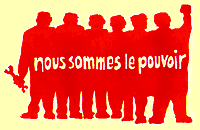
    It was a mistake to say the least. In this grossly patronizing atmosphere, youthful opposition to foreign policy quickly grew into an overall critique of Western society. Like the revolutionary movements of the 1920s and 1930s the Situationists focused on the power of capitalism, propped up by the state, to overwhelm individual freedom. Unlike their predecessors who sought to revolutionize politics, they sought to revolutionize life itself.
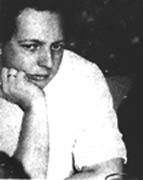
    Raoul Vaneigem, in The Revolution of Everyday Life, observed that poverty in modern Western society went deeper than simple economic depravation. Social conventions, reinforced by political institutions and an all-encompassing media, compelled individuals to not only consume but what to consume and how. Locked in this daily routine of consumption, life was futile, barren, and dull.
    The history of our times calls to mind those Walt Disney characters who rush madly over the edge of a cliff without seeing it, so that the power of their imagination keeps them suspended in mid-air; but as soon as they look down and see where they are, they fall.
    What does this have to do with Critical Mass? The creative, spontaneous, and joyful potential of the human imagination was crushed everywhere in Western societies especially on the very streets of its large cities. Well before the San Fancisco Critical Mass, Debord highlighted the subtle connections between what he called the Spectacle of modern life and the automobile. In fact, his nine Situationist Theses on Traffic reads as if it were a Critical Mass manifesto.
    1. A mistake made by all the city planners is to consider the private automobile (and its by-products, such as the motorcycle) as essentially a means of transportation. In reality, it is the most notable material symbol of the notion of happiness that developed capitalism tends to spread throughout the society. The automobile is at the center of this general propaganda, both as supreme good of an alienated life and as essential product of the capitalist market: It is generally being said this year that American economic prosperity is soon going to depend on the success of the slogan "Two cars per family."

    2. Commuting time, as Le Corbusier rightly noted, is a surplus labor which correspondingly reduces the amount of "free" time.

    3. We must replace travel as an adjunct to work with travel as a pleasure.

    4. To want to redesign architecture to accord with the needs of the present massive and parasitical existence of private automobiles reflects the most unrealistic misapprehension of where the real problems lie. Instead, architecture must be transformed to accord with the whole development of the society, criticizing all the transitory values linked to obsolete forms of social relationships (in the first rank of which is the family).

    5. Even if, during a transitional period, we temporarily accept a rigid division between work zones and residence zones, we must at least envisage a third sphere: that of life itself (the sphere of freedom and leisure — the essence of life). Unitary urbanism acknowledges no boundaries; it aims to form an integrated human milieu in which separations such as work/leisure or public/private will finally be dissolved. But before this is possible, the minimum action of unitary urbanism is to extend the terrain of play to all desirable constructions. This terrain will be at the level of complexity of an old city.

    6. It is not a matter of opposing the automobile as an evil in itself. It is its extreme concentration in the cities that has led to the negation of its function. Urbanism should certainly not ignore the automobile, but even less should it accept it as its central theme. It should reckon on gradually phasing it out. In any case, we can envision the banning of auto traffic from the central areas of certain new complexes, as well as from a few old cities.

    7. Those who believe that the automobile is eternal are not thinking, even from a strictly technological standpoint, of other future forms of transportation. For example, certain models of one-man helicopters currently being tested by the US Army will probably have spread to the general public within twenty years.

    8. The breaking up of the dialectic of the human milieu in favor of automobiles (the projected freeways in Paris will entail the demolition of thousands of houses and apartments although the housing crisis is continually worsening) masks its irrationality under pseudopractical justifications. But it is practically necessary only in the context of a specific social set-up. Those who believe that the particulars of the problem are permanent want in fact to believe in the permanence of the present society.

    9. Revolutionary urbanists will not limit their concern to the circulation of things, or to the circulation of human beings trapped in a world of things. They will try to break these topological chains, paving the way with their experiments for a human journey through authentic life.
    Tomorrow: On to Hyde Park!

    Labels: , , , , ,

    5.8.06

    Street ballet - Part III

    To be honest, I'm rather surprised by the Street ballet - Part II. Trained as a social scientist, I thought I would have described the Chicago Critical Mass as a movement, or at least an organization, with the usual suspects who wield, albeit subtlety, power and influence.

    It's neither an organization nor a movement in the strict sense of these terms. Take the leadership for example. If you visit the CCM list, you'll find those folks who post almost every day and, at often, several times a day. Then if you ride in just one mass, or hang out at The Handlebar, or show up at the Critical Mass Happy Hour held several days before each ride, you'll actually see these folks.

    They're the ones who print up and distribute the route maps or flyers. They're the ones who pass out the Critical Mass t-shirts. They typically start off the mass at Daley Plaza, rolling along with fantatsic sound systems, or cork traffic. They're the ones who usually alter the course of the ride or keep it from strecthing out to far by yelling Mass Up! For your typical, garden-variety social scientist this looks a lot like leadership ... except that it's not.

    I haven't been involved in the mass long enough to observe this but others who have; tell me that the riders in the lead constantly change particularly during the rides themselves. Take corks for example. According the Critical Mass folks in San Francisco, where the ride was invented,
    Corks are the diplomats of the ride. Their title comes from their function. Here’s how they work: one or two bicyclists block each lane of oncoming traffic as the ride goes through an intersection, making sure that even if a gap large enough for a car to drive through should develop, cars are stopped where they are. This tactic is especially effective if the cork takes a friendly, non-antagonistic stance with motorists, even holding up signs that say thanks for waiting and honk if you like bikes! Corks need to protect the rear of the ride, too, from cars turning into it. Of course, no one needs to be officially designated as a cork, and people will largely take on this role of their own initiative.
    Anyone can cork. And cork they do! There are no qualifications. No one is chosen before the mass begins or when a threatening motorist appears. Rather it's expected that the riders closest to the situation should cork. I think that the only hesitation to cork comes from those who may be introverted, or timid because it's their first mass.

    What all this tells me is that the Critical Mass encourages and depends upon a very rare form of leadership. It really doesn't have anything to do with coercion or popularity. It has everything to do with how each rider leads spontaneously in the moment. One of the ride's few mottoes, There are No leaders, could just as easily be stated as Everybody's a Leader! Such spontaneously action is incredibly powerful. As Gandhi said,
    It's the action, not the fruit of the action, that's important. You have to do the right thing. It may not be in your power, may not be in your time, that there will be any fruit. But that doesn't mean you stop doing the right thing. You may never know what results come from your action. But if you do nothing, there will be no result.
    For me, this is why the wonderful, spontaneous ballet of the streets, that is Critical Mass. Chicago attracts and keeps diverse folks because of a hell of a lot of cheap bikes, the strong bicycle culture, our tolerant mayor, and the usually accommodating police all contribute as well. Their spontaneous and inspired action of the moment is what has kept the ride going for over a decade.
    In Chicago, these folks follow the words of Henry David Thoreau (in Walden),
    Go confidently in the direction of your dreams! Live the life you've imagined. As you simplify your life, the laws of the universe will be simpler.

    Labels: , , , ,

    22.7.06

    Mea culpa %(

    I've been in Oregon ... Illinois ... over the last three days working with 40 Turkish and Greek high schoolers from Cyprus. You know: the place where the US Navy is dumping 20,000 American refugees from the new war between Lebanon and Israel. We were working on peace issues at the NIU Laredo Taft Field Campus. More on that later. I'm taking a nap...

    And in the meantime, a Chicago designer’s signage shows the benefits of bicycling over driving By Laurie Manfra from MetropolisMag.com on 17 April 2006.
    A stretch of bike path leads through the verdant winding roads of Central Park then dumps you smack in the treacherous hustle of Midtown to fend for yourself. When it comes to creating bike-friendly routes, New York is clearly behind the curve despite recently being named the country’s third best biking city (with more than one million people) by Bicycling magazine. Chicago, on the other hand, has been working to implement the Bike 2015 Plan, Mayor Richard M. Daley’s third such initiative in the last decade and a half to promote safe and convenient cycling in the city.

    Resident environmental designer
    Kimberly Viviano is taking advantage of that progressive agenda. “I was really impressed by the new bike station he commissioned for Millennium Park. It offers so much and made me realize that the mayor and I share similar goals,” she says. After meeting with several city agencies—including the Department of the Environment, the Department of Transportation, the Transit Authority, and the Chicagoland Bicycle Federation—Viviano is in talks with the city to install her signage comparing the personal and environmental benefits of bicycling to the pitfalls of driving (an exact installation date and location has yet to be set). Vinyl banners hung on lampposts in high-visibility areas where cars and bikes typically share the road—around the Loop, in the business district, and along the Magnificent Mile—will quantify differences between the two modes of transportation with compelling statistics, such as the cost of owning and maintaining a car ($9,964 per year) versus a bike ($68 per year).


    Viviano’s signage was originally part of a proposal for a larger urban communication system titled “People Powered”—a runner-up in the 2005 Metropolis Next Generation Design Competition—which aimed to increase awareness of cyclists around the city and encourage more people to commute by bike. In addition to the signage, “People Powered” called for transparent billboards to frame cyclists, albeit briefly, along Lakeshore Drive so that gridlocked drivers might look on enviously at the self-propelled commuters breezing by them. She also proposed stenciling incentive messages such as “Independence from Fossil Fuels” on existing bike paths.

    But the city’s reservations about installing more signs on Lakeshore Drive meant Viviano needed to modify her proposal. “It took a lot of tenacity,” she says. “I really had to keep forging ahead and adapting my proposal to their constraints, which were mostly monetary.” Viviano believes that the program she developed with the city’s input could serve as a role model for other cities. “Any public awareness campaign that is implemented by a city government is very powerful because it is backed by a reputable authority,” says Noah Budnick, projects director at the New York bicycle advocacy program
    Transportation Alternatives. “Putting dollars into a campaign like this helps others take the message seriously.” Perhaps before long New York agencies will take it seriously too.

    Labels: , , ,